Stop Costly Downtime From Hidden Brake Damage
Brake problems do not just slow a truck down; they slow your entire business down. When a unit is stuck on the shoulder with failed brakes, loads are late, drivers are stressed, and your schedule falls apart.
Many brake failures are not bad luck. They come from preventable service mistakes and habits that build up damage over time, especially on heavy routes around Raleigh, I-40, and I-95. Brakes work hard in this region, with heat, moisture, traffic, and hills all pushing systems to their limits.
In this article, we will walk through common mistakes that quietly destroy brake systems, how to spot trouble early, and how smarter fleet service in Raleigh can keep your trucks safer, on the road, and productive longer.
Ignoring Brake Inspections Under Tight Delivery Schedules
When freight is stacked up and drivers are racing the clock, inspections are often the first thing to get trimmed. Pre-trips get rushed. Drivers plan to check brakes "next time." Peak freight pushes this even harder, especially heading into late fall when freight volumes grow.
Skipping or shortening brake inspections can lead to:
- Pads and shoes worn down to metal
- Uneven wear on steer and drive axles
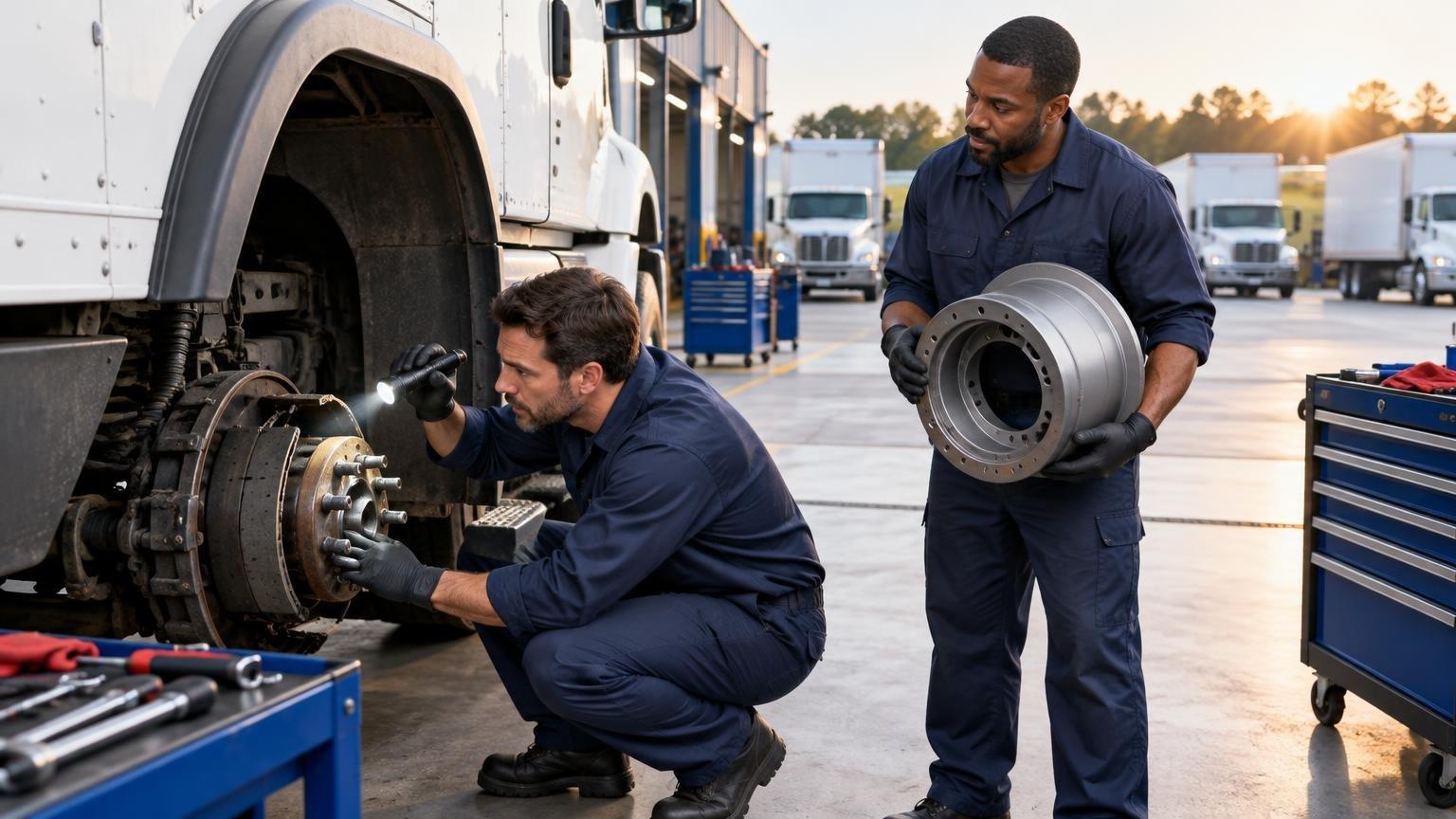
- Heat checking and surface cracks on rotors or drums
- Air chamber leaks that go unnoticed
- Loose hardware that slowly backs off
The problem is that most of these issues start small. A slight pull under braking, a faint grinding sound, a little heat checking on a drum. If no one is truly looking, that minor issue can turn into a tow call on the side of the highway.
A realistic inspection rhythm for regional and local fleets around Raleigh should include:
- Daily pre-trip and post-trip walkarounds, with drivers trained to look and listen for brake issues
- Regular in-depth brake checks as part of scheduled PMs
- Seasonal inspections before colder, wetter weather sets in
- On-site brake inspections while trucks are loading, staging, or waiting at your yard
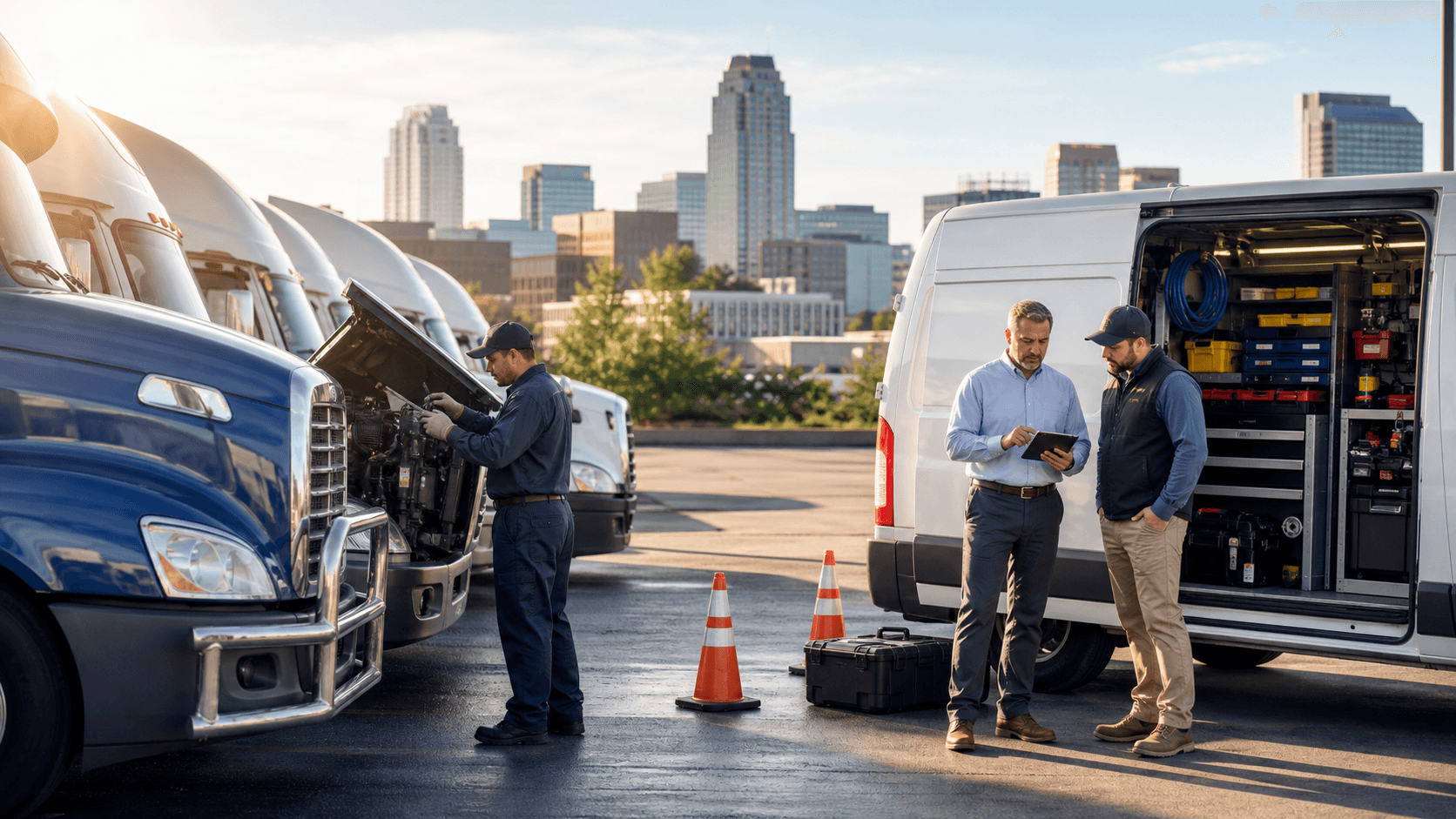
Mobile fleet service in Raleigh makes this easier. Instead of pulling trucks out of rotation, techs can come to your lot and perform real inspections while the truck is already parked.
Mismatched or Cheap Brake Parts That Do Not Fit the Route
Everyone likes to save money, but bargain brake parts often cost more in the long run. Brakes must match the truck, the weight, and the route. What works on a light city delivery truck may fail early on a fully loaded tractor running hilly interstate miles.
Using the wrong friction material or cheap parts can lead to:
- Longer stopping distances
- Brake pull or drift when stopping
- Faster wear on one side of an axle
- More heat buildup on tough grades
- Cracking and glazing on pads, shoes, and drums
Mixing brands or friction types on the same axle can also create uneven braking. One side may bite harder while the other lags. That imbalance stresses hardware, suspension, and the driver, and can trigger ABS issues.
When you spec brakes, think about:
- Vocational trucks that see constant stop-and-go, tight turns, and frequent dumps or loads
- Regional haul units that handle higher sustained speeds and heavier braking on ramps and grades
- City routes in Raleigh traffic where brakes get hot from constant red lights and congestion
- Seasonal needs like better corrosion resistance to handle moisture and winter road treatments
The right parts for your application may not be the cheapest on the shelf, but they are often the most cost-effective over the life of the truck.
Neglecting Air System Health on Heavy Trucks
On air brake trucks, the air system is the heart of the brakes. If the air is dirty, wet, or leaking, the brakes will eventually let you down. Many fleets focus only on pads and drums and forget the tanks, dryers, and lines that feed them.
Moisture and oil in the air system can:
- Corrode valves and internal components
- Freeze in lines during cold snaps, blocking flow
- Cause sticking or sluggish brake response
- Lead to intermittent problems that are hard to track down
Drivers might report that brakes feel fine one day and weak the next. Often, that is an air system problem waiting to become a road call.
A stronger preventive plan includes:
- Regular draining of air tanks to remove water and oil
- Scheduled air dryer cartridge replacement before cold weather
- Periodic leak checks on lines, fittings, and chambers
- System integrity testing before late fall and winter
Working with a reliable fleet service in Raleigh that understands local weather patterns and routes helps catch these air system issues before they strand a truck on a cold morning.
Overlooking Driver Habits That Overheat Brakes
Even the best parts and PM plan cannot overcome bad driving habits. How your drivers use the brakes every day has a huge impact on brake life and safety.
Common habits that overheat brakes include:
- Riding the brakes on long descents instead of using engine braking
- Hard, late stops in city traffic
- Tailgating and constant brake taps
- Relying only on service brakes when loaded on grades
Overheated brakes leave signs, such as:
- Glazed pads or shoes that look shiny or glassy
- Cracked rotors or drums from thermal stress
- Brake fade when loaded, where the pedal is firm but stopping power drops
- A strong burnt smell after a hill or heavy stop
Good training and clear policies can help. Focus on:
- Proper gear selection before descents so the engine helps hold speed
- Safe following distances in Raleigh traffic to reduce panic stops
- Using retarder or engine brakes correctly when equipped
- Reporting any change in pedal feel, vibration, smell, or pull right away
When drivers bring up small concerns early, your maintenance team or service partner can fix issues before they turn into failures.
Skipping Winterization and Post-Winter Brake Checks
Cold, wet months are hard on brakes. Road treatments, moisture, and temperature swings in central North Carolina all speed up wear and corrosion. Late fall is the perfect time to get ahead of this.
Common winter-related brake mistakes include:
- Not checking slack adjusters and stroke before cold sets in
- Ignoring rust on hardware, backing plates, and brackets
- Leaving exposed lines and fittings unprotected from moisture
- Skipping ABS sensor and wiring checks when conditions are messy
A smart seasonal checklist should cover:
- Verifying brake balance from axle to axle
- Measuring pushrod stroke and confirming slack adjusters function
- Cleaning and lubricating key components where needed
- Inspecting ABS sensors, tone rings, and wiring for damage or buildup
- Scheduling post-winter inspections to find hidden corrosion, cracked components, or seized parts before the spring rush
Having a local provider of fleet service in Raleigh handle pre-winter and post-winter brake checks helps you spot problems that basic walkarounds miss. That means fewer surprises when freight picks up and every truck needs to be ready.
Turn Brake Problems Into Safer, More Profitable Miles
Brake failures are rarely random. They are usually the result of skipped inspections, rushed decisions on parts, weak air system care, driver habits, or seasonal neglect. The good news is that all of these can be improved with a clear plan and the right support.
At East Coast Fleet Service, we see every day how consistent, application-specific brake maintenance leads to safer trucks, fewer roadside calls, and more productive miles across central North Carolina. With mobile service, roadside support, and in-shop heavy truck brake repair, we help fleets keep their units on the road and out of the breakdown lane.
Keep Your Fleet On The Road With Reliable Mobile Service
When a truck is down, your schedule and bottom line take the hit, so we bring expert fleet service in Raleigh directly to your yard or jobsite. At East Coast Fleet Service, we diagnose and repair issues on-site to reduce downtime and keep your drivers moving. If you are ready to schedule service or have questions about your fleet's needs, contact us and we will help you plan the next steps.