
Protect Fleet Tires Before Winter Hits Raleigh
Tire rotation is one of the simplest ways to keep a mixed fleet rolling, but it is also one of the easiest to put off. When you run light-duty, medium-duty, and heavy-duty trucks side by side, it gets even trickier. Different trucks wear tires in different ways, and if rotation falls behind, you feel it in safety, downtime, and fuel use.
Fall in Raleigh brings warm days, cool nights, and plenty of wet leaves and rain. Those swings are hard on rubber, especially when your tires already have uneven wear. A planned truck tire rotation service before winter helps your fleet:
- Even out tread wear across all positions
- Cut the risk of blowouts on busy routes
- Keep grip strong on wet, leaf-covered pavement
Mixed fleets need different, but coordinated, rotation strategies. The light-duty service truck, the box truck, and the Class 8 tractor should not all be on the exact same rotation interval. With a clear plan, you can keep schedules simple for drivers and still give each truck class what it needs.
Why Mixed Fleet Tire Wear Is Harder to Manage
Managing tire wear on one truck type is tough enough. With sprinter vans, box trucks, day cabs, and tractors in the same fleet, things get more complicated. Each type sees different loads, routes, and driver habits, and all of that shows up on the tread.
Here are a few reasons mixed fleet tire wear is harder to control:
- Light-duty vans often run stop-and-go city routes, which scrub the front tires.
- Box trucks carry uneven loads that shift, so certain axles work harder.
- Day cabs and tractors spend more time at highway speeds, so small balance or alignment issues add up fast.
Tire construction and axle setups also change the game. Some trucks run duals on the drives, others use wide-base singles. Steer tires carry different forces than drive or trailer tires. Misalignment or low pressure can ruin a steer tire quickly on a heavy truck, while the same issue might show up as cupping or feathering on a smaller delivery vehicle.
When fleets try to use one simple rotation interval for every truck, a few bad things can happen:
- Certain units get rotated too late and need early replacements
- Others get rotated too often, wasting labor with little gain
- Safety issues can sneak up on busy highways like I-40 and I-440
A mixed fleet needs more than a generic time or mileage rule. It needs a structure that fits the way each truck actually works.
Building a Smart Tire Rotation Plan for Mixed Trucks
A good rotation strategy starts with sorting the fleet. You want to group trucks by how they are built and how they are used, not just by plate number.
Helpful ways to segment your trucks include:
- Truck class, such as light-duty vans, medium-duty box trucks, and tractors
- Axle setup, including single vs tandem, duals vs wide-base single tires
- Duty cycle, like local delivery, regional haul, or vocational work
Once you group your units, you can set rotation intervals that fit each category. High-mileage tractors might be on a strict mileage-based plan. Lower-mileage service trucks might need time-based checks, because even with fewer miles, they still see aging, heat cycles, and uneven use.
A professional truck tire rotation service looks deeper than just miles. It reviews:
- Tread depth readings on every position
- Wear patterns such as shoulder wear, cupping, and feathering
- Past inspection notes and repair history
From there, you can decide which positions to swap. On heavy trucks, that might mean changing tires between steers and drives when patterns allow, or moving trailer tires into less demanding spots. On lighter trucks, the plan might be more like front-to-rear or cross-rotation to balance cornering and braking wear.
Seasonal Rotation Timing for Raleigh Roads
Fall is a smart time for tire work in central North Carolina. Colder mornings, more rain, and darker commutes make grip and stopping distance more important. If you get ahead of rotation and inspection now, your fleet enters winter with stronger tread and fewer surprises.
Raleigh has a mix of city streets, tight delivery routes, and highway miles. That mix affects timing:
- Light-duty service trucks that live in urban areas wear fronts faster from turning and parking, so they might need shorter rotation gaps.
- Heavy over-the-road units stack up highway miles quickly, so mileage-based triggers can come up often, even if tread looks even at a quick glance.
A seasonal checklist can help keep things consistent for all truck sizes:
- Check tread depth on every wheel position
- Inspect sidewalls for cuts, bulges, and weather cracking
- Adjust inflation based on current temperatures and actual loads
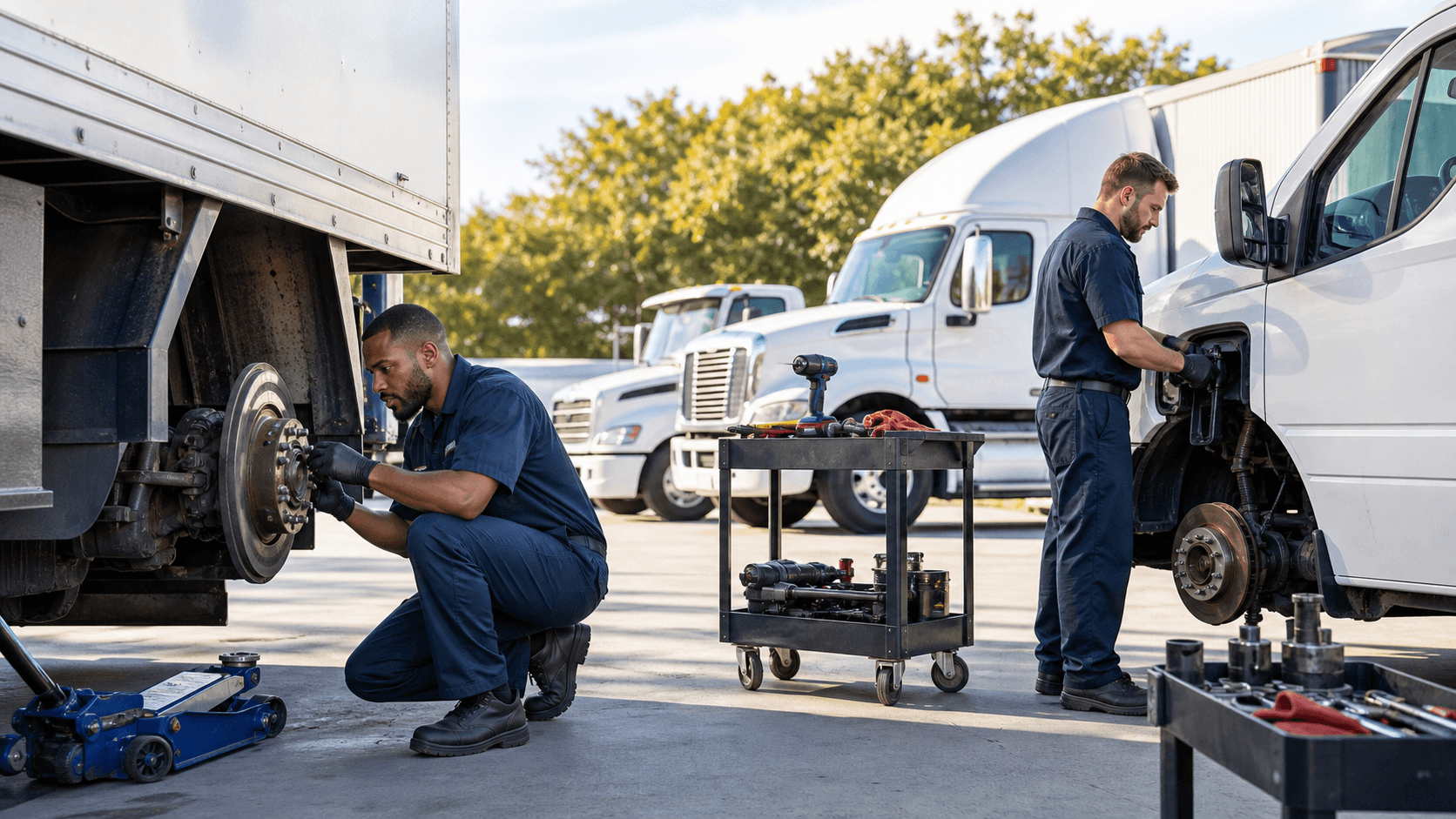
- Pair tire rotation with brake checks, lights, and basic fall maintenance
When tire work lines up with other service, your trucks spend less time parked and more time working.
Boost Safety, MPG, and Uptime with Consistent Rotations
Consistent rotations are not just about squeezing extra miles out of each tire. They play a big part in safety, fuel use, and daily uptime.
Properly rotated and inspected tires help:
- Keep handling predictable when roads are wet or covered in leaves
- Shorten stopping distances by keeping more even tread across the axles
- Lower rolling resistance, which can help fuel economy for both small and large trucks
Even wear also protects casing quality. When tires wear out evenly, they are better candidates for retreading later, which supports long-term tire planning. Regular rotation and inspection catch issues like irregular wear, low pressure, or damage before they become roadside breakdowns.
Fewer blowouts and fewer emergency stops on the shoulder mean:
- Less risk to drivers and other road users
- Less schedule disruption for time-sensitive loads
- More control over when and where your trucks get worked on
When rotation becomes part of your normal maintenance rhythm, it turns from a chore into a tool that supports the whole operation.
How Mobile and in-Shop Service Simplify Tire Care
Keeping mixed fleet tires in shape is easier when the service comes to you. Mobile maintenance units can handle many inspection and rotation tasks right at your yard or jobsite. That limits deadhead miles, keeps drivers close to their routes, and makes it simpler to hit your rotation intervals on time.
It also helps to bundle services. A mobile visit can include:
- Tire rotation and inflation checks
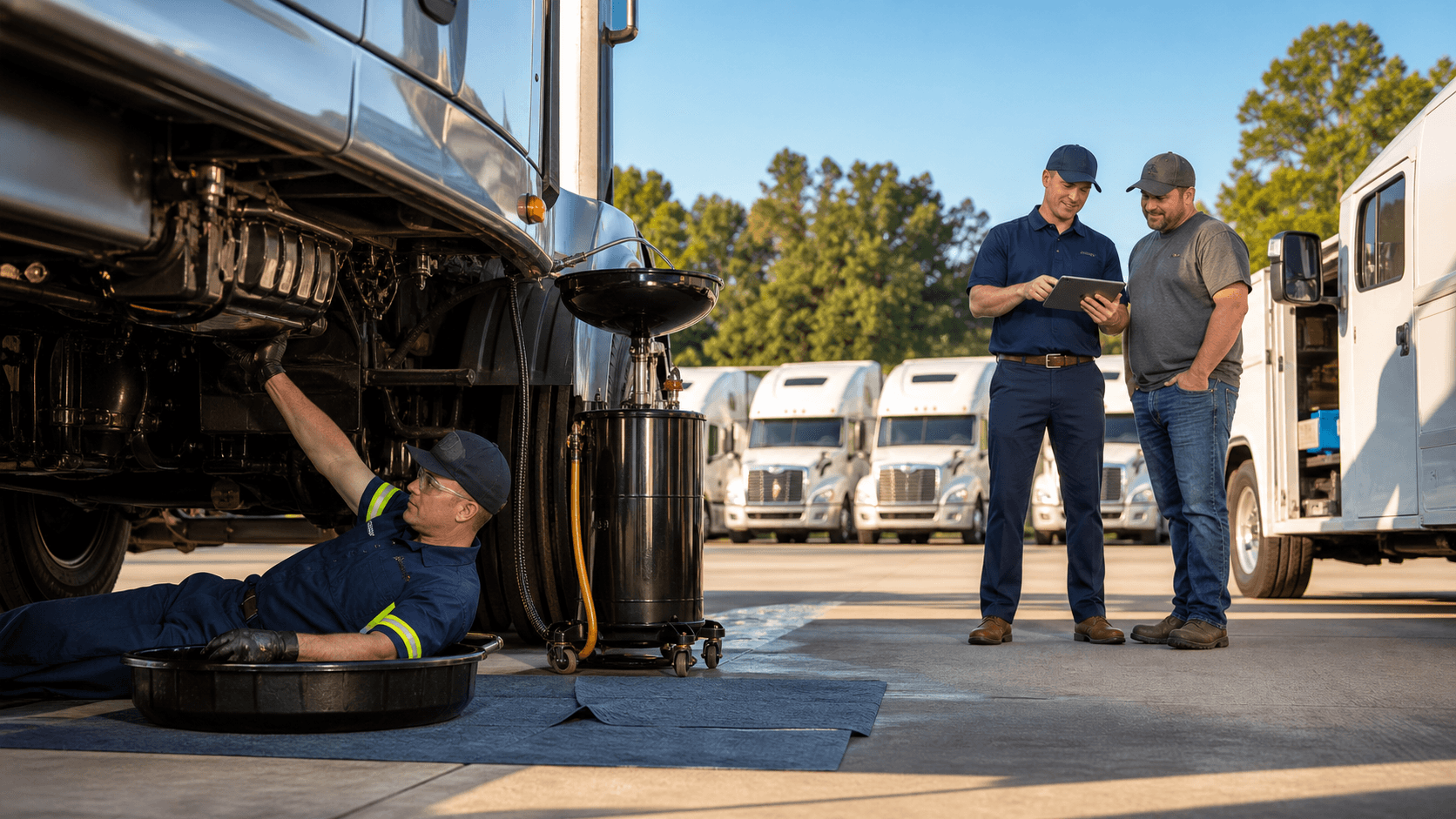
- Preventive maintenance on fluids and filters
- Minor repairs and basic safety inspections
Sometimes, trucks do need in-shop work instead of mobile service. That can be the case when you are dealing with complex tire issues, alignment concerns, or when you want to pair rotation with suspension or brake repairs. For a mixed fleet, using both mobile and in-shop options gives you flexibility. Light-duty units might get quick yard visits, while heavier equipment comes into the shop for deeper checks.
By planning ahead and using the right mix of on-site and in-shop support, fleets across central North Carolina can roll into colder weather with a clear tire rotation strategy that works for every truck size they run.
Keep Your Fleet Rolling With Reliable Tire Care
If you are ready to cut unplanned downtime and improve tire life, schedule our mobile truck tire rotation service today. At East Coast Fleet Service, we come to your yard or job site so your trucks stay in operation while we handle the maintenance. Reach out to our team to discuss your schedule and fleet needs, or contact us now to book a visit.