Stop Repeat Battery Failures Before They Sideline Trucks
A truck that will not start at 5 a.m. is not just an inconvenience. It is missed routes, drivers on the clock with nowhere to go, and dispatch scrambling to reshuffle loads. When the same unit is on its third battery in a year, the problem is not the battery itself. It is something deeper in the electrical system.
Dead batteries are often a symptom. The real causes are hidden issues like parasitic draws, weak alternators, poor cable connections, the wrong battery spec for the job, and long days in North Carolina heat that cook everything under the hood. All of that adds up to roadside calls, tow bills, late deliveries, driver frustration, safety worries, and a lot of paperwork.
Our goal as a mobile fleet service provider is not just to do another mobile battery replacement and move on. We want to find out why the battery died in the first place so your trucks stay road-ready. Below, we walk through how repeat failures happen, how smart testing catches problems early, what parasitic draw really is, and how charging-system checks protect every new battery you buy.
Why Fleet Truck Batteries Fail Again and Again
Fleet batteries rarely fail for only one reason. It is usually a mix of heat, load, and daily use that slowly wears them down.
North Carolina summers mean high under-hood temperatures, especially in slow traffic and stop-and-go routes. That heat speeds up internal damage in the battery, such as plate sulfation and fluid loss. Delivery trucks that crawl through town all day with frequent stops feel that stress even more.
On top of the heat, modern trucks carry a lot of electrical load, even when they are not moving. Common drains include:
- Telematics and GPS units
- Dash and driver-facing cameras
- In-cab HVAC during breaks
- Liftgates, APUs, and power inverters
Many routes also involve short trips where the engine does not run long enough to fully recharge the batteries. Add extended key-on time during loading, or drivers running accessories while parked, and batteries spend much of their life only partly charged. That low state-of-charge slowly damages them inside.
We also see common setup and maintenance mistakes at the fleet level, for example:
- Wrong battery group size or CCA rating for the truck or route
- Mixing old and new batteries on the same truck
- Loose or corroded connections that limit charging
- Ignoring early signs like slow cranking or dim lights
On the surface, a quick, cheap battery swap sounds easy. But when the real problems stay in place, the new battery fails early, you pay for another mobile battery replacement, and the truck is down again. A structured battery and charging evaluation stops that cycle and protects your trucks and your budget.
Smart Testing Strategies That Catch Problems Early
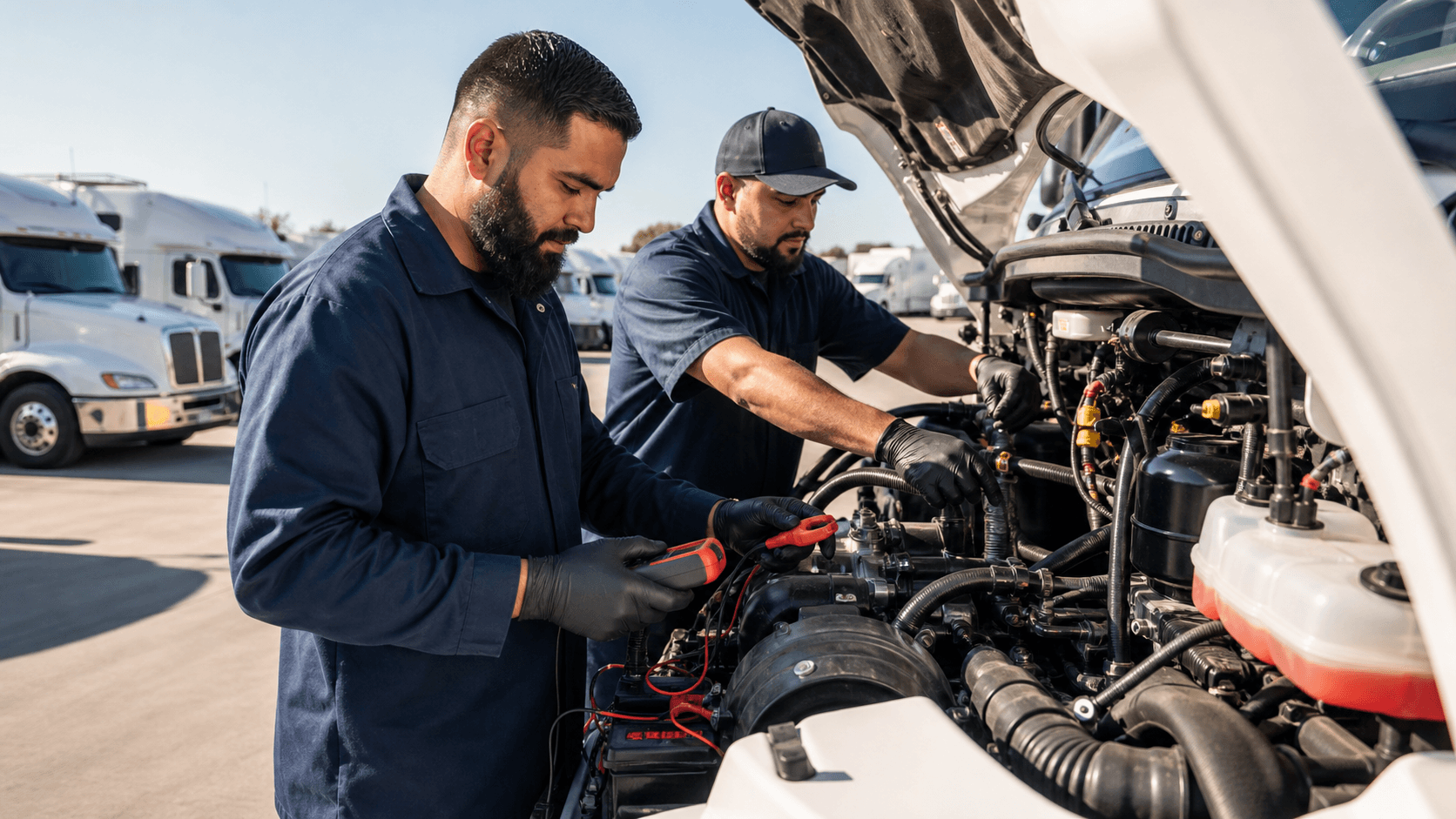
Good electrical maintenance starts with a clear testing plan, not guesswork. When we check a battery, we look at more than just whether it starts today.
A simple but powerful battery test can include:
- Visual inspection for corrosion, damaged cables, loose clamps, and swelling
- Open-circuit voltage test after the truck has been off for a while
- Conductance or load testing to see how the battery performs under strain
It is important to test both at rest and under load. Watching the voltage drop during cranking, then how fast it recovers after start-up, tells you if a battery is just barely hanging on. That is the time to act, before it fails on the road or on a Monday morning in the yard.
The best way to stay ahead is to build battery testing into your normal preventive maintenance. Many fleets do checks on a set schedule, such as quarterly or ahead of seasonal extremes like late-summer heat and winter cold. Over time you build a trend history for each unit, so a truck with a pattern of low readings can be flagged before the driver is stranded.
Mobile service makes this easier. Our technicians can fold battery testing into routine on-site visits. That reduces surprise breakdowns and cuts down on emergency mobile battery replacement calls during your busiest hours.
Finding Parasitic Draws That Drain Batteries Overnight
Parasitic draw is a quiet battery killer. It is any unwanted electrical load with the key off that drains the battery while the truck sits. The result is a truck that was fine on Friday, then will not crank on Monday.
Common causes of parasitic draw in fleet trucks include:
- Aftermarket telematics or GPS units wired to constant power
- Dash cameras that never shut off
- Interior or compartment lights stuck on
- Faulty relays or modules that will not go to sleep
- Reefers or liftgates tied into the wrong circuit
To track down a draw, technicians use an ammeter in series with the battery. After giving the truck modules time to time out, we watch the current draw number. If it is above normal, we remove fuses one at a time to see which circuit causes the drop. That points us to the area that needs repair or rewiring.
Parasitic draw often looks like a bad battery problem. The battery tests weak because it has been drained again and again. If no one checks for draw, that truck keeps getting new batteries with the same wiring issue in place. Having a mobile team perform draw testing right at your yard saves time, since trucks can sit in their normal parked condition while we diagnose the system.
Charging-System Checks That Protect New Batteries
Even the best battery will not survive long if the charging system is not doing its job. Alternator output and voltage regulation must match the way the truck is used, especially with heavy accessory loads and long, hot days.
Key charging-system checks include:
- Alternator output voltage and amperage at idle and at higher RPM
- Voltage drop testing across power and ground cables
- Inspection of belts, tensioners, and electrical connectors
If a system is undercharging, the battery spends its life only partly full, which leads to sulfation and early failure. If it is overcharging, the battery can overheat, lose fluid, and fail, and sensitive electronics can be damaged at the same time.
Testing needs to reflect real-world use. That means checking the system with headlights on, HVAC on high, liftgates running, and other hotel loads active. On a hot North Carolina afternoon, that is when weak alternators show up. During mobile battery replacement, we like to confirm that the charging system is within spec so the new unit is not set up to fail.
Turn Battery Headaches Into a Predictable Maintenance Plan
Repeat battery problems do not have to be part of fleet life. With a clear plan, batteries become another predictable maintenance item instead of a constant emergency.
A strong battery program can include:
- Regular battery testing as part of PM
- Parasitic draw checks on trucks with repeated failures
- Routine charging-system inspections during service visits
- Standardized battery specs across your fleet
It also helps to document every battery failure with the suspected root cause. Over time, patterns appear that lead you to certain body styles, routes, or add-on equipment that create issues. Training drivers to report slow cranks, dim lights, or odd electrical behavior early gives your maintenance team a head start before a no-start event.
For fleets across North Carolina, especially those running heavy electrical loads in summer heat, a structured approach to batteries, parasitic draw, and charging systems keeps trucks road-ready and cuts surprise downtime. With the right mobile partner handling testing and diagnostics on-site, you spend less time reacting to dead batteries and more time keeping freight moving.
Keep Your Fleet Moving With Reliable Mobile Battery Service
When a truck is down with a dead battery, you lose valuable time and money. Our mobile battery replacement brings fully equipped technicians directly to your vehicles so you can get back on the road faster. At East Coast Fleet Service, we work around your schedule and location to minimize downtime and disruptions. Ready to schedule service or ask a question about your fleet needs? Just contact us and we will help you plan the next steps.