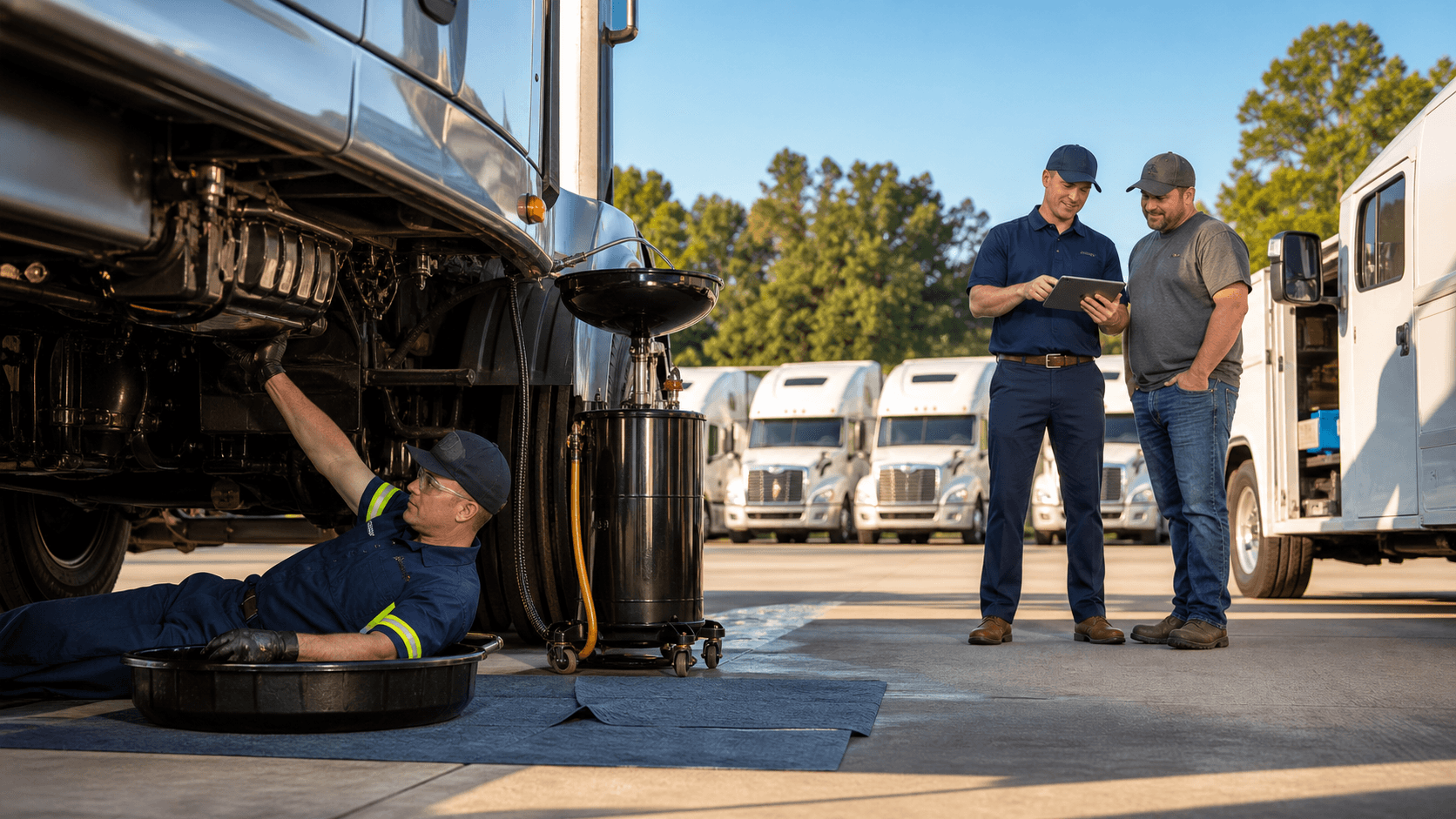

Turn Fleet Inspections Into Guaranteed Uptime
Fleet inspections are supposed to protect your trucks, drivers, and loads. But when the repair list keeps growing, those inspection reports can start to feel like a problem of their own. Many fleets across North Carolina see the same pattern: lots of DVIRs, lots of preventive maintenance findings, and not enough structure to decide what gets fixed first.
When peak demand hits, especially in the heat of summer, that lack of structure shows up as breakdowns, missed windows, and long days for your drivers. The truth is, most fleets are not short on data. They are short on a simple, shared way to rank repairs. That is where a triage scoring system can help turn inspection findings into a clear uptime plan.
Triage scoring means giving every DVIR or preventive maintenance finding a simple priority score. The score is based on safety, compliance, and how much that item can hurt your schedule if it fails on the road. Once you have those scores, you can line up repairs in the right order and plan who touches what, and when. A mobile maintenance partner can then come on-site to knock out the right work first so those scores turn into more trucks rolling on time.
Why Your Repair Backlog Keeps Growing
If your backlog never seems to shrink, you are not alone. DVIR and fleet inspection findings pile up for a few common reasons.
Some typical issues include:
- Drivers write problems in different ways, so the same issue gets scored differently
- Maintenance choices are made on the fly, based on who is yelling the loudest
- Shops are swamped during shipping peaks and just grab the next unit in line
- Comfort and cosmetic items get mixed in with real safety concerns
When there is no clear system, everything starts to feel urgent. The result is chaos. A cracked brake drum fights for attention with a loose interior panel. An AC complaint in July looks just as important as a brake air leak, even though one can park a truck on the shoulder and the other is mostly comfort.
The hidden costs of an unmanaged backlog show up as:
- Roadside breakdowns that eat hours of drive time
- Missed delivery windows and upset customers
- Drivers stuck waiting on tows or repair approvals
- Failed inspections and possible DOT issues right when freight demand is high
When you treat every repair as a five-alarm fire, your team spends more time reacting and less time planning. A simple prioritization framework changes that. Drivers know what to flag. Dispatch knows which trucks to hold. Maintenance vendors know what to fix now and what can ride along until the next PM. Every service visit becomes more focused.
Build a Simple Triage Scoring System That Works
You do not need a fancy system to get big results. A practical triage score can be built around four basic questions:
- Safety impact: Could this cause a crash or injury if it fails?
- Compliance risk: Could this fail a DOT or roadside inspection?
- Operational impact: Could this cause a breakdown or serious delay?
- Time sensitivity: Is it getting worse fast or likely to fail soon?
From there, you can use a simple scale like 1 to 5 or low, medium, high. For example:
- Score 5: Air brake leaks, steering play, bad tires, inoperative stop lights
- Score 4: Coolant leaks, low tread trending toward out-of-spec, weak batteries
- Score 3: AC not cooling well in summer, small exhaust leaks, minor fluid seep
- Score 2: Window switch issues, worn but safe seats, door latch adjustment
- Score 1: Cosmetic body damage, trim rattles, minor interior wear
Season and weather should shift some of these scores. In a hot North Carolina summer, overheating, coolant problems, weak AC, and borderline tires might move up a level, because they are more likely to fail under heat and heavy loads. In colder months, you might bump up batteries, starters, and glow-plug issues.
Tie the scores to clear response targets so everyone knows the plan:
- Score 5: Do not dispatch the unit until it is fixed
- Score 4: Repair within 24 hours or before next long trip
- Score 3: Repair within the week or at the next short downtime window
- Scores 1 and 2: Bundle with the next scheduled PM or planned shop day
Now every finding has both a score and a clock.
Turning DVIR and PM Findings Into Actionable Work Orders
A triage score only helps if it feeds a simple workflow. Here is a basic flow that many fleets can use.
- Driver completes the DVIR or inspection and reports an issue.
- A supervisor or maintenance lead reviews the note, applies the triage score, and assigns a standard category, like brakes, tires, electrical, cooling, or body.
- Issues are added to a central list by unit, sorted by score and response target.
- High-priority items are slotted into the next repair window or an on-site mobile service visit.
- Lower items are grouped with upcoming PM appointments to limit downtime.
Standard language matters a lot. If three drivers write three different versions of the same brake concern, you may end up with three different scores. Creating a simple menu of phrases for common problems keeps things consistent. For example, you might standardize terms like "low air pressure warning active" or "steering pull under braking" so the same phrase always gets the same score.
Once the list is clean, batching becomes easy:
- Group Scores 1 and 2 items with oil changes and regular PM
- Put Score 3 items on the schedule for the next light day
- Hit Score 4 and 5 items with the next available mobile slot or shop bay
A mobile provider can visit your lot and clear the highest-scoring items on several units in one run. That means less deadhead time to the shop and more assets staying close to their routes.
Measuring the Impact of Better Triage on Uptime
After you put a triage system in place, the next step is to measure if it is working. A few simple metrics can tell the story.
Useful numbers to track include:
- Unplanned roadside events per month
- Average repair turnaround time by score level
- Units out of service per day or per week
- Percentage of DVIR and PM items closed within their target windows
If you still see a lot of emergency calls, look for patterns. Maybe cooling system issues keep turning into breakdowns during hot months. That might mean your cooling items are scored too low or their response targets are too slow. The same goes for brakes, tires, or electrical problems that show up again and again.
Regular review meetings between operations, safety, and maintenance partners can help you:
- Spot repeat findings on the same units or systems
- Decide where to spend more time on PM checks
- Adjust triage scores to match real-world risk
- Plan parts stocking for the problems that show up most
Over time, a good triage system should give you fewer surprise outages and more predictable capacity. Trucks that used to fail in the middle of a busy week are now caught and fixed during planned downtime. That kind of steadier uptime makes it easier to keep customer promises and protect your drivers' hours.
Put Triage Scoring to Work with Mobile Fleet Support
Moving from a reactive repair mindset to a clear triage scoring approach is not about adding extra work. It is about giving the work you already do a simple order. With a shared language and scoring scale, drivers, dispatch, and maintenance are all looking at the same priorities, which leads to safer vehicles, stronger compliance, and more uptime from the maintenance effort you already put in.
The best way to start is small. Pick three or four priority levels, apply them to your current stack of DVIR and fleet inspections for a few weeks, and adjust based on what you see. As the pattern takes hold, you can bring in mobile on-site maintenance support to clear the highest-scoring items first, then roll lower priorities into upcoming PM visits. That is how triage scoring turns from numbers on a list into real trucks ready for the busiest months of the year.
Keep Your Fleet Safe, Compliant, and On the Road
Stay ahead of unexpected breakdowns and compliance issues with our comprehensive fleet inspections. At East Coast Fleet Service, we focus on catching small problems early so your vehicles spend more time working and less time in the shop. If you are ready to set up a maintenance plan or schedule service, contact us today so we can help keep your fleet running at its best.