Keep Your Mixed Fleet Moving in Raleigh's Busiest Season
Roadside trouble is never convenient, but some times of the year hurt more than others. Late September around Raleigh means heavier freight demand, busy campuses, tighter schedules, and traffic that never seems to let up. When one truck in your mixed heavy fleet is parked on the shoulder, the domino effect can hit every part of your operation.
Downtime in this season can lead to missed appointments, rejected loads, late fees, and frustrated drivers waiting on help instead of rolling to the next stop. For many fleets, one bad breakdown can set back an entire week of planning. That is why having fast, professional roadside assistance in Raleigh, NC is more than an emergency number. It is a strategic tool to keep trucks moving and customers happy.
A trusted roadside partner helps you keep control when things go wrong, limits the damage to your schedule, and gives dispatch a clear plan instead of guesswork. When you run a mixed fleet, that support has to cover every type of unit you put on the road, not just highway tractors.
Unique Roadside Risks for Mixed Heavy Truck Fleets
A mixed fleet is any operation that runs more than one kind of truck. That might include:
- Tractors and trailers
- Straight trucks and box trucks
- Dump trucks and roll-offs
- Service trucks and small specialty units
Every vehicle type brings its own roadside risk. Different wheelbases, suspensions, brake setups, and electrical systems mean different failure points, and what is a quick fix on a highway tractor may not be simple on a construction truck or a service body with PTO equipment.
As temperatures swing between cool mornings and warm afternoons, a few roadside issues tend to show up more often, including cooling system strain as engines work harder in stop-and-go traffic; tire failures from heat, load, and worn tread finally giving out; brake and suspension wear that shows up as pulling, noise, or loss of stopping power; and electrical and starting problems as batteries and connections react to cooler nights.
Not every roadside provider is ready to deal with this mix. Handling tractors is one thing, but being ready for straight trucks, dump trucks, and service trucks with different layouts requires the right tools and heavy truck service equipment on board, diagnostic gear that works across multiple platforms and years, access to common heavy-duty and medium-duty parts, and technicians who are comfortable working on a wide range of commercial vehicles. Without that, trucks sit longer on the shoulder while someone tries to figure out what they can or cannot work on.
What Reliable Roadside Assistance in Raleigh, NC Should Include
If you are trusting someone with your trucks on the side of I-40 or US 64, they need to bring more than a pickup and a tool bag. For commercial and heavy truck roadside support, look for coverage that includes:
- Mobile diagnostics to read codes and confirm the real problem
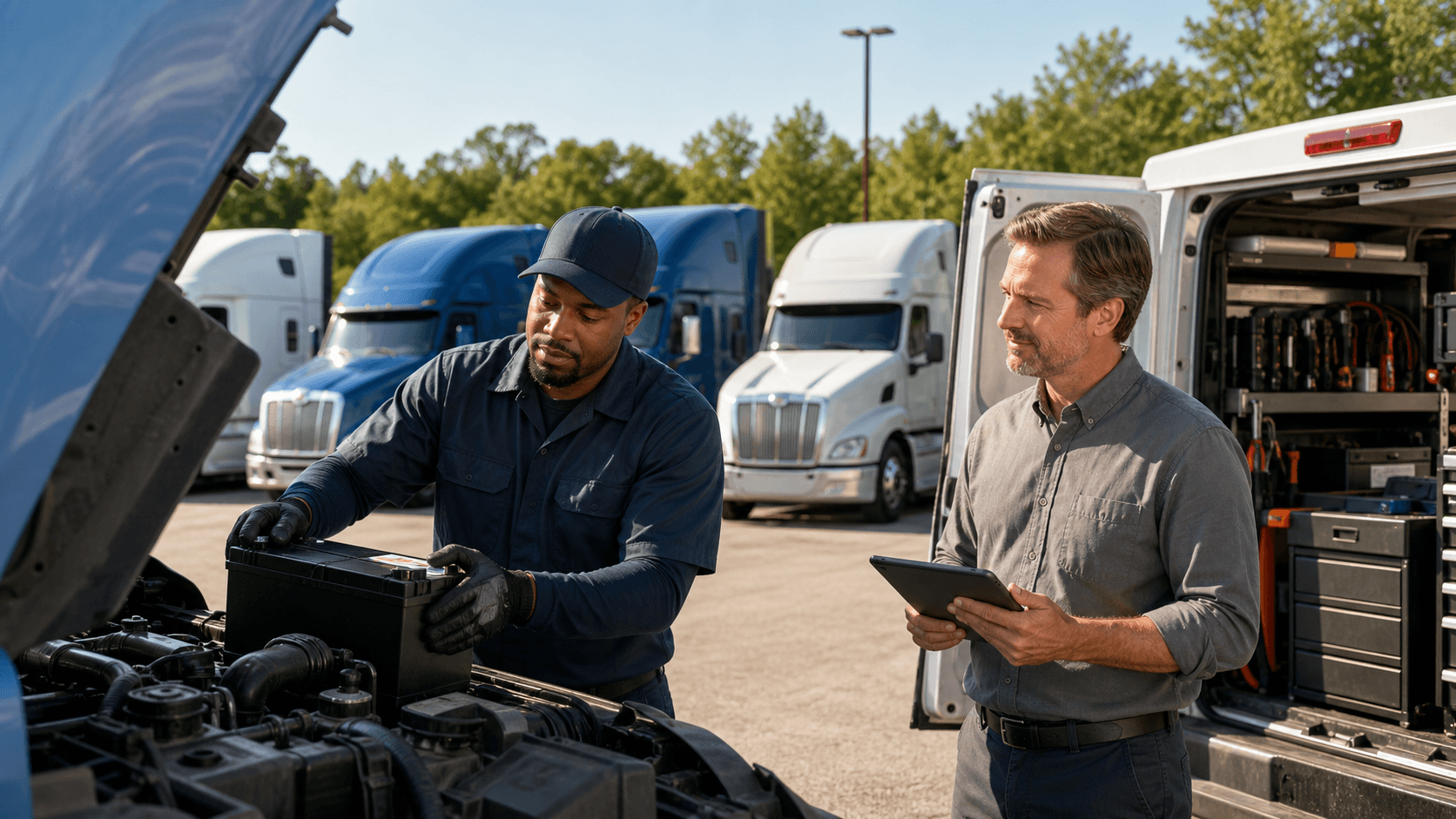
- Jump-starts and battery service
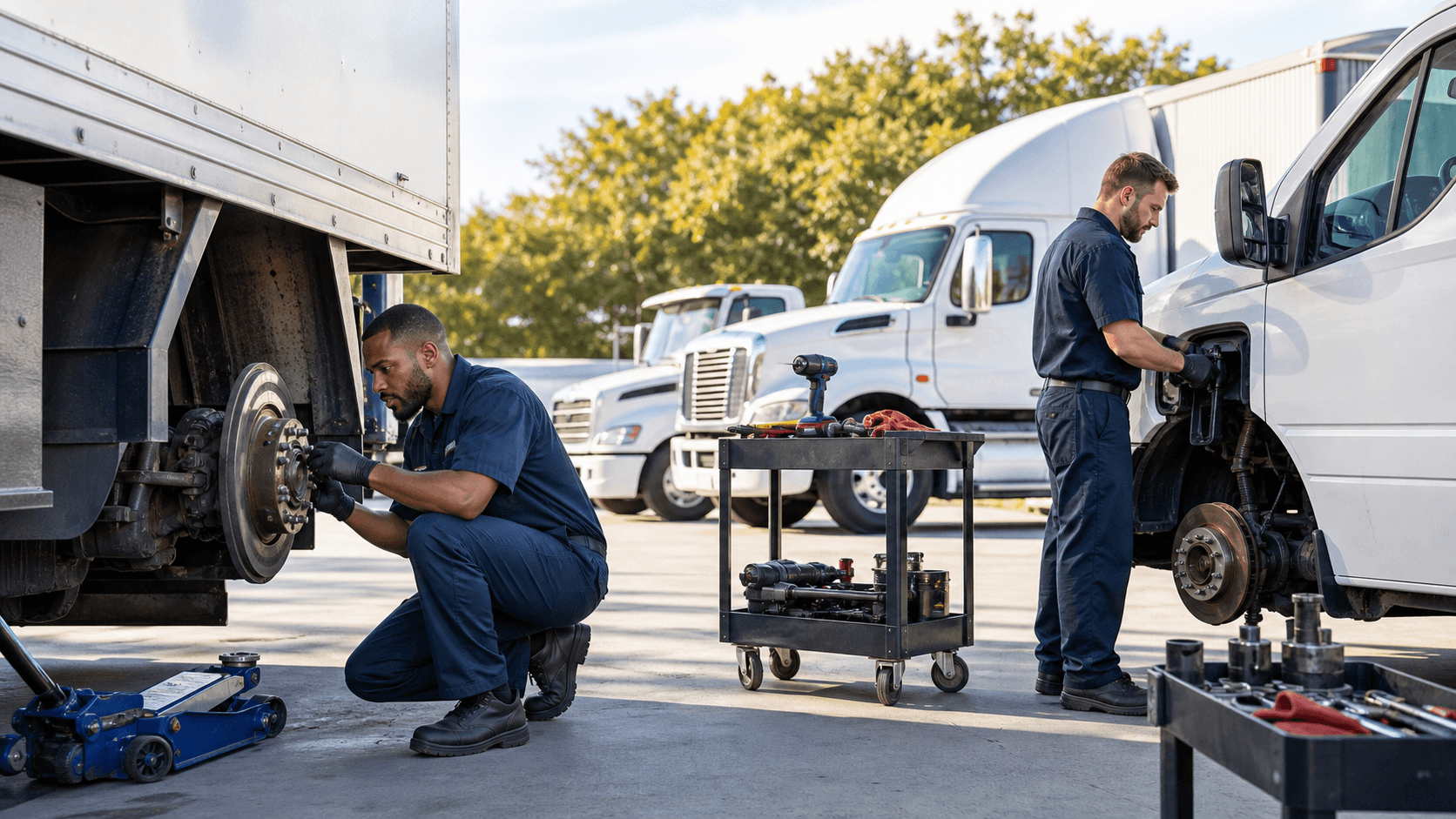
- Air leak checks and basic brake work
- Tire service, including swaps and repairs when possible
- Fuel delivery in a no-start situation
- Minor driveline and suspension repairs that can safely be handled roadside
Around the Raleigh area, traffic and lane space are always a concern, which makes fast response and clear communication just as important as the repair itself. Fleet managers should expect 24/7 coverage (not just daytime hours), realistic ETAs and updates so dispatch can adjust routes, and simple explanations of root cause and repair status.
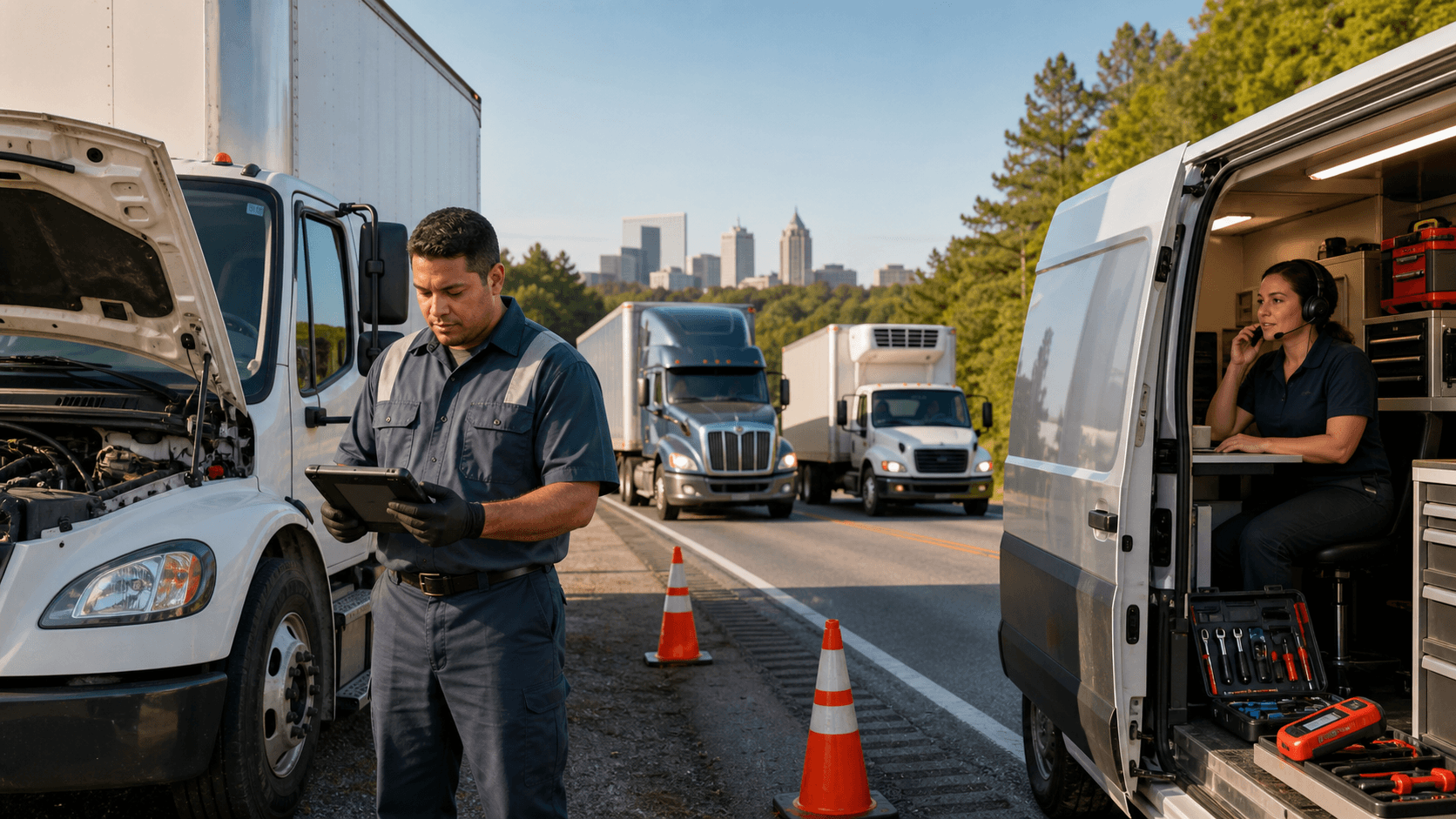
Safety has to come first on busy highways like I-40, I-440, I-85, US 1, and US 64. A good roadside team will:
- Set proper cones and lighting so your driver and other traffic stay safe
- Park in a way that shields the work area when possible
- Decide quickly whether to repair on the shoulder or recommend a tow to a shop
That kind of decision-making keeps small problems from turning into bigger incidents.
How Mobile Fleet Service Reduces Costly Downtime
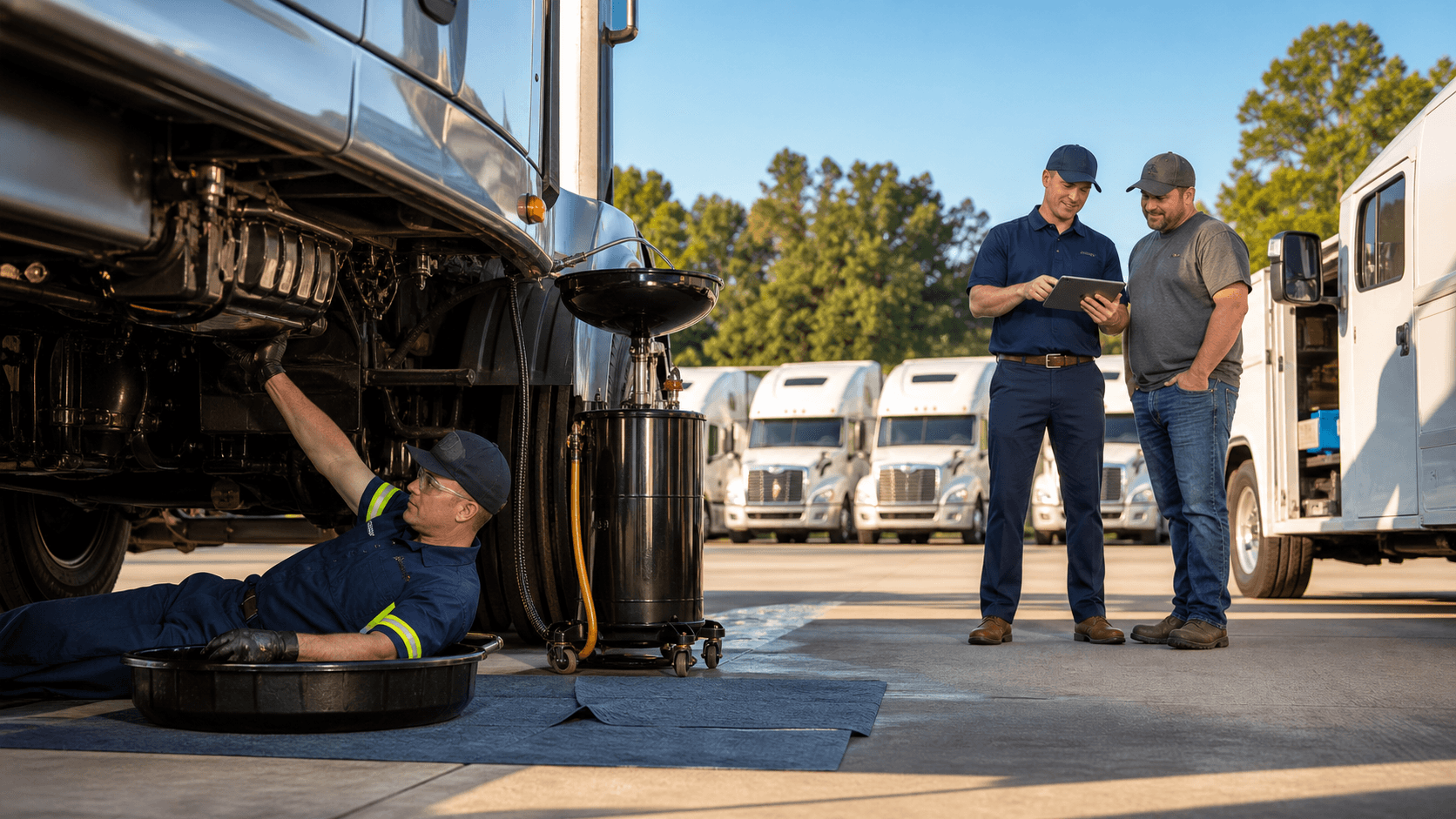
Mobile service can be the difference between a truck losing an hour and losing a full shift. When a trained tech rolls to the breakdown with what they need, they can often:
- Diagnose the issue right where the truck sits
- Make safe, on-the-spot repairs when the problem is minor
- Get the unit back on the road without waiting for a tow truck or an open bay
For fleets, this saves more than time. It can reduce towing and recovery costs when a full tow is not required, missed delivery windows and related penalties, the chance of claims when loads are delayed or compromised, and wasted driver hours sitting on the clock instead of working their route.
The real power comes when roadside support pairs with planned maintenance. When your mobile service provider also helps with regular inspections and shop work, you get small issues spotted early before they fail on the highway, fewer surprises in your most demanding seasons, and better uptime and more predictable performance across all vehicle types. That safety net helps mixed fleets keep schedules tighter and drivers more confident in their equipment.
Choosing a Heavy Truck Roadside Partner You Can Trust
Not all roadside providers are built for commercial fleets, and even fewer are ready for mixed heavy-duty work. When you are choosing a partner, focus on a few key points:
- Heavy truck and commercial focus, not just passenger vehicles
- Experienced diesel technicians who understand real-world fleet work
- Well-stocked service trucks that carry common parts and tools
- The ability to work on all the major makes and models in your operation
It also helps when a single provider can handle both mobile repairs and in-shop work. That way, if a roadside fix is not the full answer, the truck can move straight into deeper diagnostics, component replacement, or more complex repairs without starting over with someone new.
Before you commit, it is smart to ask questions like:
- What areas around Raleigh and central North Carolina do you cover?
- What are your typical response times during peak hours?
- How do you communicate status updates to fleet managers and drivers?
- What billing options do you offer for fleets?
- How do you track repeat issues so we can address root causes?
Clear answers here tell you a lot about how that provider will perform when the pressure is on.
Prepare Your Fleet Before the Next Breakdown Strands You
The best time to think about roadside assistance is before a truck is stuck on the shoulder with traffic flying by. As freight and local demand pick up in the fall, fleet managers around Raleigh and central North Carolina can get ahead by:
- Setting up a roadside assistance relationship ahead of time
- Making sure drivers know who to call and what details to share
- Keeping vendor contacts in one place so dispatch is not scrambling
Training drivers helps too. Simple steps like pulling as far off the travel lane as possible, turning on hazard lights, and staying in a safe spot away from traffic give your roadside provider a better starting point. When those basics line up with a maintenance plan that fits your mixed fleet, breakdowns are less chaotic and repairs move faster.
For fleets in the Raleigh area, East Coast Fleet Service focuses on keeping mixed heavy trucks moving with 24/7 mobile support and in-shop repair options. When you understand your risks, pick the right partner, and prepare your team, roadside trouble becomes a problem you manage, not a crisis that controls your day.
Get Reliable Roadside Help For Your Fleet Now
When a truck is down, every minute counts, and that is exactly why East Coast Fleet Service is ready to respond with fast, professional roadside assistance in Raleigh, NC. Our experienced technicians come equipped to handle common breakdowns on the spot so your drivers can get back on the road safely and quickly. If you are ready to schedule service or need immediate support, contact us today so we can help keep your fleet moving.