
A smart summer fleet plan keeps trucks moving, drivers on schedule, and customers happy, even when the heat is working against you. One of the quiet troublemakers in hot weather is the battery, especially when vehicles are idling with the AC on, running liftgates, lights, and other power-hungry gear.
In this article, we will talk through how summer heat wears down batteries, warning signs to watch for, how to build a simple battery strategy, and why mobile battery replacement is a strong fit for busy fleets in North Carolina. The goal is to help you cut roadside breakdowns and keep your routes running smoothly as you head into fall.
Keep Every Vehicle Moving in Peak Summer Heat
Late summer in North Carolina can be tough on commercial vehicles. Temperatures stay high, humidity is thick, and traffic backs up on highways and in town. Drivers sit in long lines with the AC on full blast, engines idling, and electrical systems working harder than usual.
Those months are also pressure months for many fleets. Schedules tighten for:
- Delivery routes that must hit narrow time windows
- School transportation and activity buses that cannot be late
- Municipal and utility vehicles with public service commitments
- Service and repair fleets that must keep appointments on track
Any breakdown at the wrong time can throw off the rest of the day. When a battery quits at a loading dock or on the shoulder of a busy road, you lose time, you strain your drivers, and you put extra stress on dispatch.
A thoughtful summer readiness plan, built around proactive battery checks and mobile battery replacement, can turn many of those breakdowns into quick, planned stops. While we keep vehicles road-ready on-site, your drivers can focus on what they do best, which is serving your customers and communities.
How Summer Heat Drains Fleet Battery Life
Heat is tougher on batteries than cold. High temperatures speed up chemical reactions inside the battery, which sounds good, but it actually shortens its life. Fluid in the battery can evaporate faster, plates can corrode, and internal parts wear down more quickly.
Under the hood, things get even hotter when:
- Vehicles idle for long stretches with the AC running
- Trucks pull heavy loads in stop-and-go traffic
- Refrigerated units, liftgates, lights, and inverters draw steady power
These are all common duty cycles in North Carolina. Short trips between stops give the alternator less time to recharge the battery. Long idle times with the AC on keep the under-hood temperature high. Over time, this mix leads to weaker batteries that quit without much warning.
Some warning signs get brushed off as "quirks" until it is too late. Watch for:
- Slow cranking when the driver turns the key
- Interior or exterior lights dimming when using liftgates or other equipment
- Radios, cameras, or GPS units resetting randomly
- Needing jump-starts more than once on the same unit
These problems tend to show up most often late in the summer. That makes early fall a smart time to stop and ask, "Which batteries are going to give us trouble next?"
Building a Summer-Ready Battery Strategy for Fleets
A simple seasonal plan can catch weak batteries before they strand a driver. Start by putting a few key times on your maintenance calendar.
A useful inspection cycle might look like this:
- Pre-summer baseline checks before the heat settles in
- Mid-summer checks on higher-risk vehicles
- Late-summer readiness checks before the busy fall season
During a battery readiness check, a technician should:
- Load test the battery to see how it performs under demand
- Inspect terminals, cables, and grounds for corrosion or loose connections
- Check alternator and starter performance to confirm the whole system is healthy
- Confirm the battery has the right cold-cranking amps rating for the vehicle and its job
Not every unit needs the same level of attention at the same time. You can prioritize by focusing on:
- High-mileage or high-use units
- Vehicles with liftgates, refrigeration, or other power-hungry accessories
- Trucks with older batteries or unknown battery history
- Units on time-sensitive or safety-critical routes
If you use fleet maintenance software, it helps to log battery tests, jump-start incidents, and replacements. Over time, you can spot patterns, predict which vehicles will need service next, and plan mobile battery replacement visits before drivers start calling in from the shoulder.
Why Mobile Battery Replacement Beats Shop Visits
Traditional shop visits pull vehicles out of their normal flow. You have to schedule a bay, move the truck off route, wait for service, then pull it back into rotation. That means hours of downtime and more work for dispatch.
Mobile battery replacement flips that script by sending the technician to the truck, wherever it is practical and safe. That might be:
- At your yard during off-hours
- At a jobsite while the crew is working
- At a planned stop on the route
With mobile service, a technician can test the battery on-site, swap it if needed, and check the charging system before the truck rolls back out. The driver stays close to the route, and dispatch does not have to rebuild the day around a shop visit.
There are also safety and compliance benefits. A solid mobile plan helps you avoid:
- Risky jump-starts in tight yards or along busy roads
- Drivers stranded on the shoulder waiting for help
- Missed appointments that can hurt contracts or public service levels
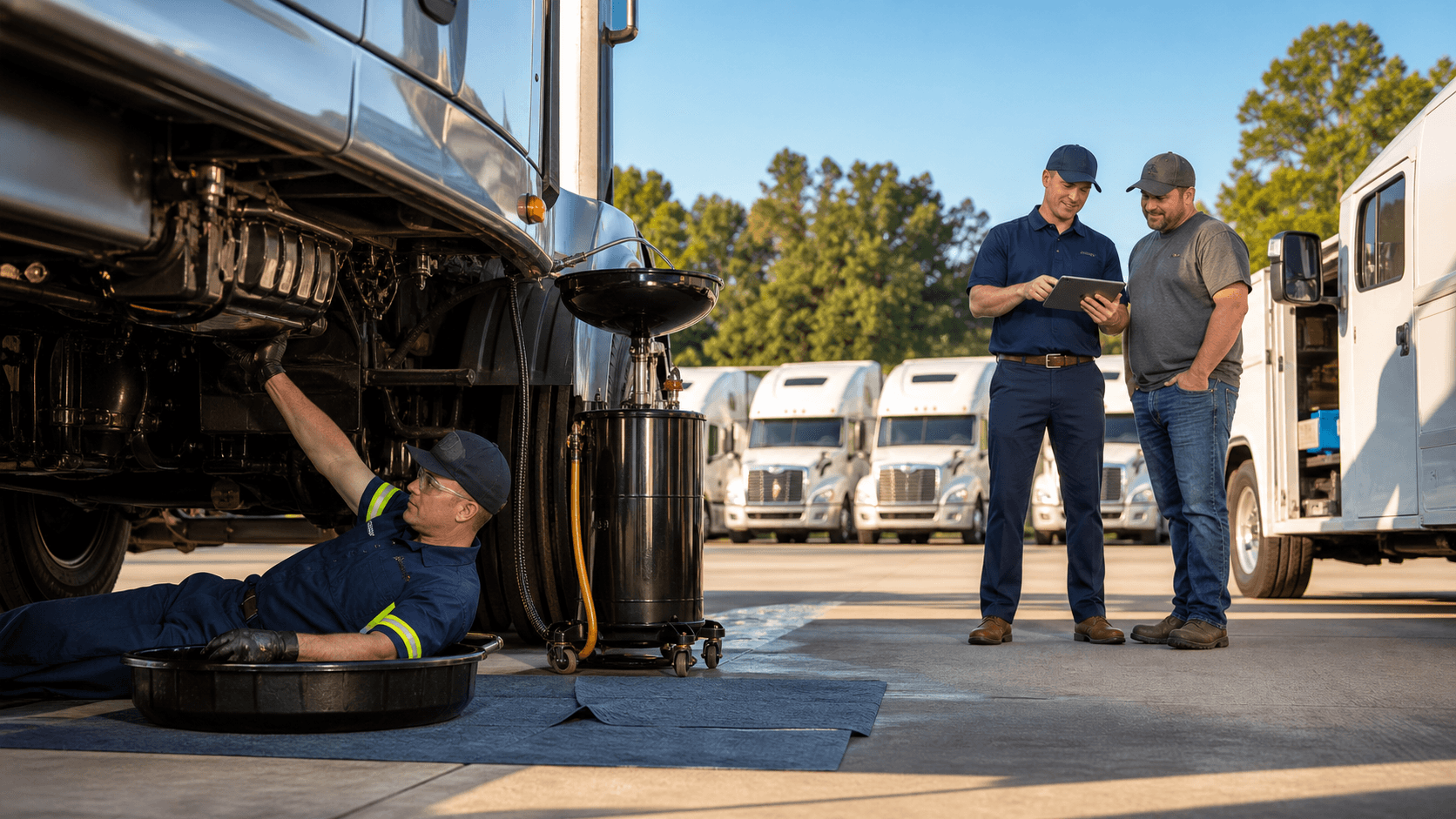
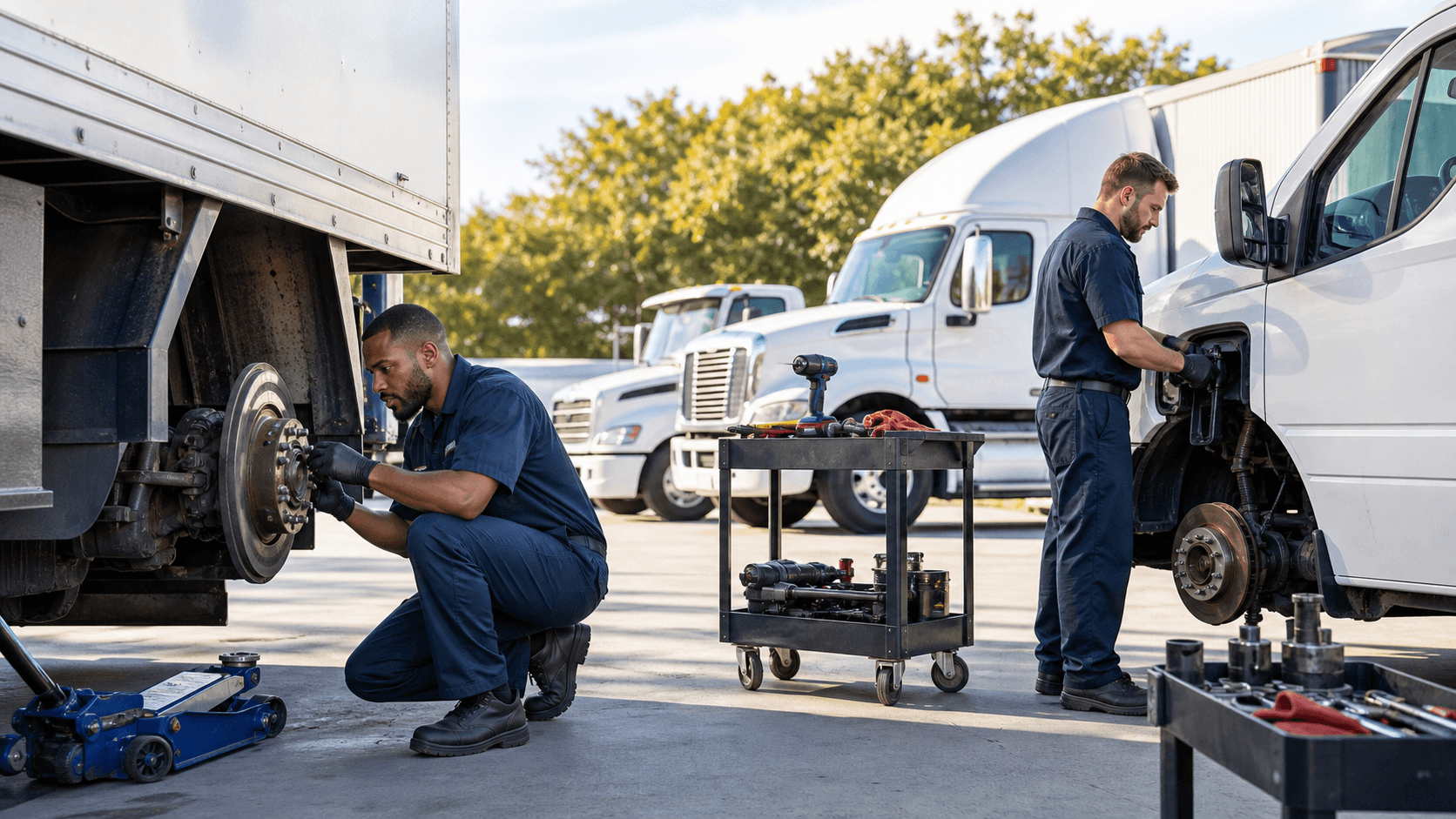
On top of that, mobile battery work can be bundled with other on-site services like oil changes, tire checks, or brake inspections. One visit can clear a list of small issues and leave the truck ready for the next run.
Coordinating Summer Readiness Across Your Whole Fleet
To make this work across an entire fleet, it helps to group vehicles and match service plans to how each group is used. Many fleets break things out by:
- Light-duty units, such as service vans and pickups
- Medium-duty trucks, including box trucks and smaller straight trucks
- Heavy-duty tractors and specialized vehicles
Each group has different patterns. Light-duty vehicles may be in and out of tight urban spots all day. Heavy-duty units might run longer highway miles with fewer stops. Adjust how often you test and replace batteries based on how hard each group works and how serious the impact would be if one fails.
You can also fit mobile battery replacement and preventive work around your normal flow, such as:
- Overnight service at your yard while vehicles are parked
- Pre-dawn visits before drivers start their day
- Mid-day checks during known downtime windows
Good communication makes this smoother. Fleet managers, dispatchers, and technicians should share:
- Which routes are most time-sensitive
- Any units that have had recent electrical issues
- Time windows when each vehicle can be taken offline briefly
This planning helps you control costs by turning surprise failures into planned visits, cutting down on emergency calls, tow bills, and penalties tied to missed deliveries or skipped service stops.
Put a Late-Summer Battery Plan Into Action Now
Late summer and early fall are a smart time to look back and see how your fleet handled the heat. Take note of which vehicles needed jump-starts, which drivers reported slow cranks or dim lights, and any units that seemed to struggle with electrical loads.
From there, build a short action list for the coming weeks. Decide which trucks need battery testing first, where mobile visits make the most sense, and how to bundle battery checks with other on-site services. A clear plan will help your drivers stay safer, protect your schedules, and send your vehicles into the fall season ready for the work ahead.
East Coast Fleet Service provides professional on-site fleet maintenance across North Carolina, including mobile battery replacement, oil changes, tires, brakes, and inspections that keep commercial vehicles on the road with less downtime. A thoughtful battery strategy, backed by reliable mobile service, can turn late-summer heat from a constant headache into just another part of a well-managed fleet.
Keep Your Fleet Moving With On-Site Battery Service
When a truck is down with a dead battery, every minute counts, and we bring the solution directly to your lot or roadside location. Our mobile battery replacement service is designed to get your vehicles started quickly so your team can stay on schedule. At East Coast Fleet Service, we test, replace, and properly dispose of old batteries on-site to minimize downtime and hassle. Ready to schedule service or ask a question about your fleet needs? Just contact us and we will take care of the rest.