
Keep Your Fleet Moving All Summer Long
Peak construction season hits hard in the Raleigh area. Jobs stack up, deadlines get tight, and every truck, van, and trailer in your fleet suddenly feels twice as busy. When your schedule is packed, even a single down vehicle can throw the whole week off.
Unexpected breakdowns in summer heat do more than slow things down. They can stall crews on a job site, delay materials, drive up overtime, and strain client relationships. A truck on the side of the road is not earning money, and neither is the crew that is stuck waiting on it.
That is why a total fleet service approach matters so much when work ramps up. Instead of reacting to problems as they pop up, you plan ahead, keep up with maintenance, and handle issues before they strand a truck. With the right support, you can keep vehicles road-ready while keeping them on the job, not sitting in a shop bay all day.
How Peak Construction Season Strains Your Fleet
From late spring through the heat of summer, your vehicles work harder than usual. Higher mileage, heavier loads, and more trips between job sites all add up. Stop-and-start traffic around Raleigh, backing into tight sites, and hauling equipment puts constant stress on key systems.
Summer conditions can push weak parts past their limit:
- Engines run hotter under heavy loads
- Brakes have to work harder to slow loaded trucks
- Suspensions take a beating on rough job sites and gravel lots
- Tires carry more weight and see more debris
North Carolina heat does not just make the cab uncomfortable. It is tough on the vehicle itself. Fluids break down faster, cooling systems work nonstop, and batteries feel the strain of high temperatures. Tire pressure swings more in hot weather, which can cause uneven wear or blowouts if it is not watched closely.
Some of the most common warm-weather failure points include:
- Overheated engines from low coolant or weak cooling systems
- Brake fade when stopping heavy trucks over and over
- Tire blowouts from underinflation or worn tread
- Dead or weak batteries that give out at the worst time
When any of this happens at a job site, everything stops. Crews wait, material deliveries slip, and the whole project schedule can start to slide.
What Total Fleet Service Really Covers
Total fleet service is a simple idea: keep all the basics covered, on a set plan, so your vehicles are ready to work every day. Instead of scattered, last-minute repairs, you follow a steady routine.
A good total fleet service plan will usually include:
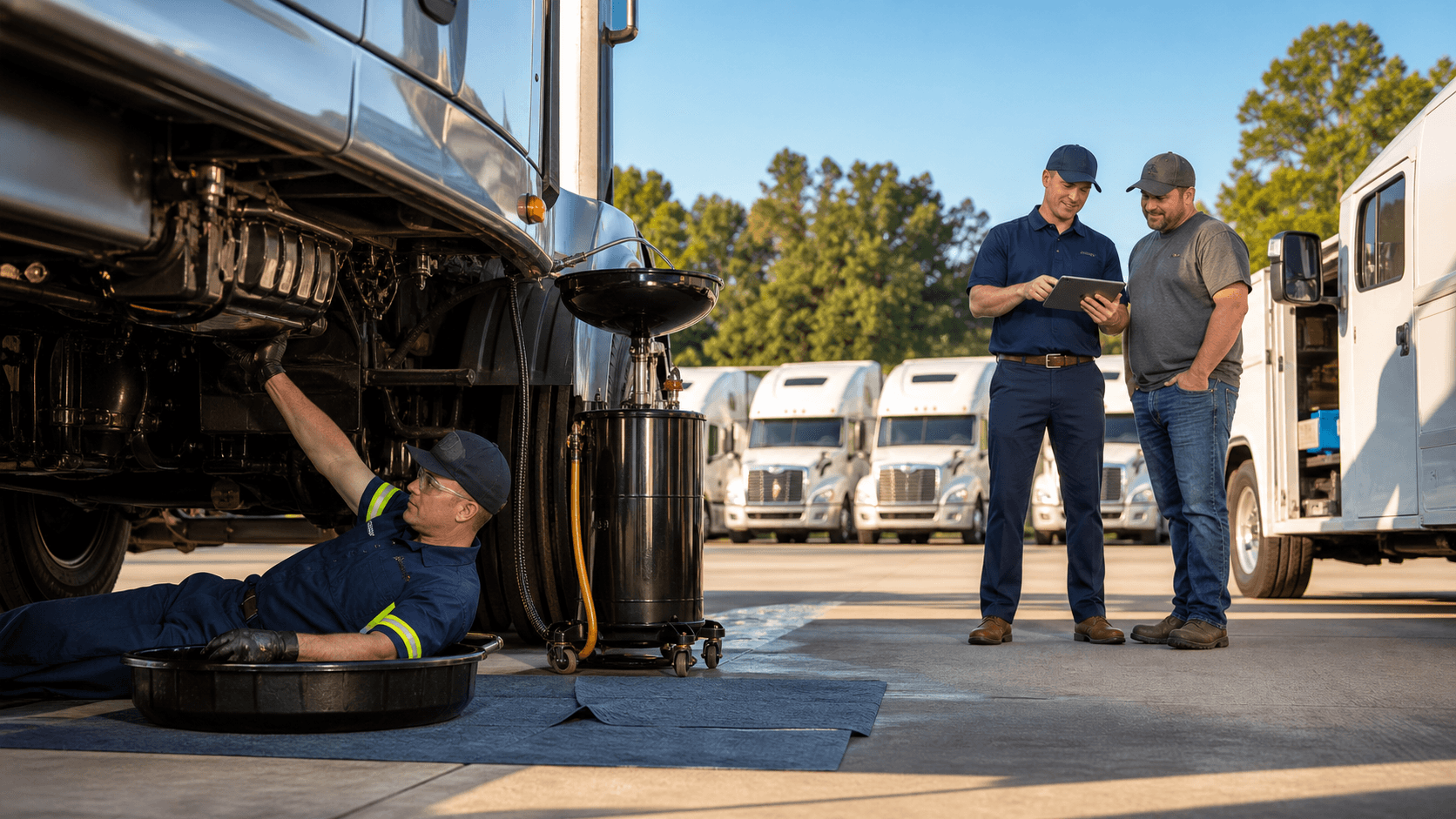
- Routine oil and filter changes
- Tire rotations, repairs, and replacement when tread is low
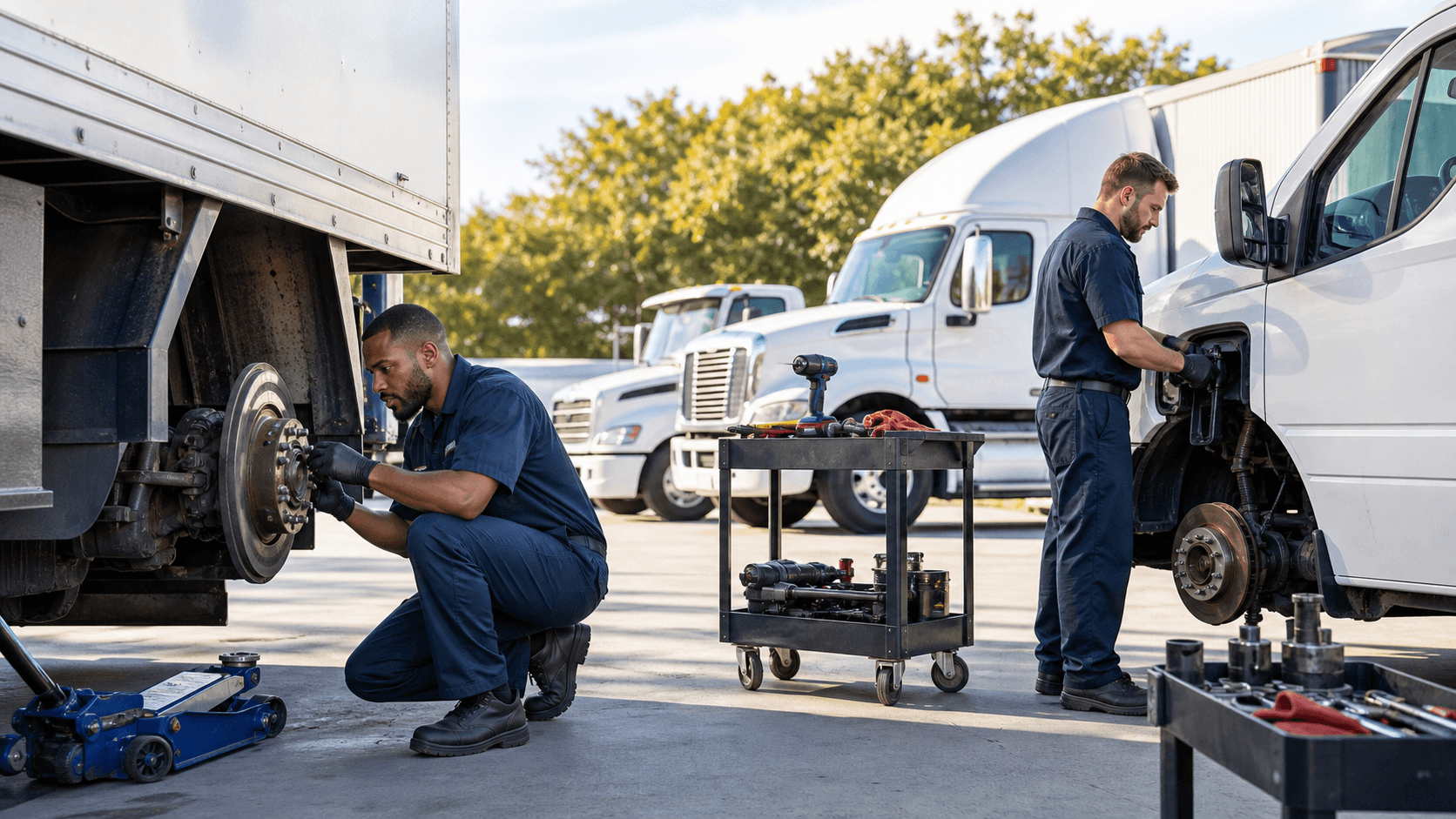
- Brake inspections and repairs before parts fail
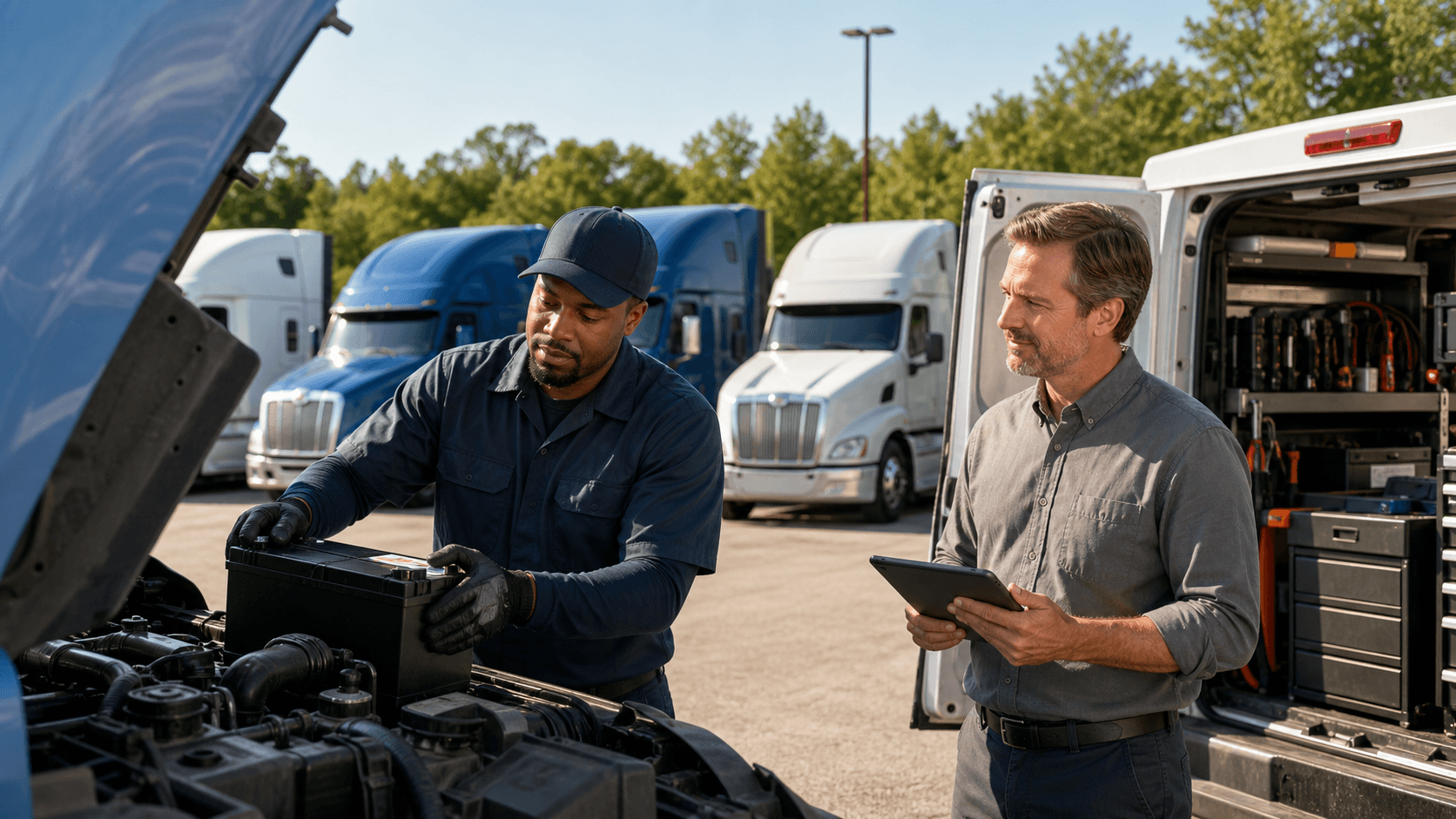
- Battery testing and replacement if a battery is getting weak
- Required inspections, including DOT and state checks
- Basic diagnostics when warning lights or odd symptoms show up
When one team is watching over all of this, it is much easier to see the big picture. You get clearer insight into which vehicles are strong, which ones need attention soon, and which might be better kept close to home instead of on your longest routes. Scheduling becomes easier because you are not guessing, you are planning.
With a mobile provider like East Coast Fleet Service, total fleet service comes to you. Our team can service multiple vehicles at your yard, office, or job site, often in a single visit. That means less shuffling of drivers, fewer trips to a shop across town, and less lost time waiting around.
Building a Summer Fleet Maintenance Game Plan
To get through peak construction season without constant breakdowns, you need a clear, simple game plan. It starts with knowing where your fleet stands right now.
First, review each vehicle:
- Maintenance history and last service date
- Current mileage and how fast it is racking up
- Age and typical use, light duty or heavy loads
- Known issues that keep coming back
From there, you can build a seasonal maintenance calendar. Think in three phases:
- Pre-summer inspection, before work hits full speed.
- Mid-season checkup, when mileage and heat have built up.
- Post-season service, to repair wear and get ready for the next cycle.
Tie this schedule to project milestones. For example, plan oil changes and brake checks before a big push on a key job. If you know a certain week is lighter, that is a good time to line up more in-depth service.
Driver and supervisor habits also make a big difference. Simple, consistent checks catch a lot of problems early. Helpful practices include:
- Daily walk-around checks at the start of each shift
- Clear rules for reporting new noises, smells, or warning lights
- Standard intervals for checking tires and brakes during busy months
- A simple log so issues do not get forgotten between shifts
When drivers feel expected and allowed to report problems early, you can fix small issues before they turn into tow trucks and missed deadlines.
Why On-Site Service Beats the Shop During Busy Season
Traditional shop-based maintenance can work fine during slower months, but during peak season it can make your life harder. To get one truck serviced, you might have to pull a driver off a job, send them across town, wait in a queue, then juggle pickup and drop-off.
On-site mobile service flips that around. The service comes to where the vehicles already are, which saves time and stress. A mobile team can line up several vehicles in your yard or at a job site and work through them in one visit.
Benefits of on-site total fleet service include:
- Less downtime, because trucks spend more time on the job and less in transit
- The option for early-morning or after-hours visits, so workdays are not disrupted
- Fewer rental or backup vehicles needed, since your own units stay available
- Better safety, since issues can be caught and repaired where the vehicles are parked
For construction fleets in the Raleigh area, this approach fits the way work actually happens. Crews start early, jobs may run late, and there is little slack in the schedule. When service adapts to your timing instead of the other way around, it is easier to keep everything moving.
Turn Peak Construction Season Into a Competitive Edge
Total fleet service is not just about avoiding headaches, it can help your business stand out. When your trucks show up on time, day after day, while others are stuck dealing with breakdowns, clients notice. You can say yes to more work with confidence, because you are not guessing whether your vehicles will make it through the week.
A smart next step is to look ahead at your workload. Review your active and upcoming projects, think about how many vehicles you need for each phase, and note any units that already seem tired. From there, you can plan an on-site fleet review with a mobile team like ours at East Coast Fleet Service, then shape a summer-ready total fleet service plan that matches your schedule and demand.
Keep Your Fleet On The Road With Reliable Service
When every vehicle matters, having a trusted partner to handle total fleet service can keep your operation running smoothly and reduce costly downtime. At East Coast Fleet Service, we come to you with expert technicians and fully equipped trucks so you can stay focused on your business. If you are ready to schedule service or have questions about your fleet's needs, simply contact us and we will help you map out the next steps.