
Keep Your Fleet Moving with Smarter Battery Planning
A dead battery on a hot afternoon can bring your whole schedule to a halt. A box truck that will not start in 95-degree heat ties up a driver, pushes deliveries back, and turns into an urgent roadside call instead of a simple maintenance task.
Batteries are a silent risk in any fleet. They work fine right up until the moment they do not, and that moment usually hits in a parking lot far from your shop or at a busy dock with customers waiting. When a truck does not crank, no one cares that the oil was just changed; they only see a missed delivery.
That is why a real fleet battery strategy matters. Instead of waiting for random failures, you can plan testing, replacements, and mobile battery replacement support on your own schedule. With the right partner coming directly to your yard or job site in North Carolina, you keep trucks ready to roll and protect your routes, especially when the weather turns hot and stress on electrical systems climbs.
Hidden Costs of Reactive Battery Replacement
When a battery dies without warning, the damage to your operation goes far beyond the battery itself. You pay in time, money, and stress across your entire team.
Direct costs from unplanned failures often include things like:
- Emergency roadside service fees
- Possible tow bills if the truck cannot be started on site
- After-hours or weekend charges when trucks fail outside normal times
- Extra pay for drivers stuck waiting instead of working
Those are the easy costs to see. The harder ones show up in your schedule and your customer relationships. A single dead truck can lead to:
- Missed delivery windows and rescheduled jobs
- Frustrated customers who have to wait longer than promised
- Pressure on dispatchers who must shuffle routes and drivers
- Lost trust that can hurt future work or contracts
Inside your operation, productivity drops fast. One truck down often pulls in a dispatcher, a manager, and one or more other drivers as they scramble to cover the gap. What could have been a quick battery swap in your yard turns into a chain reaction that touches the whole team.
Compare that to scheduled, on-site battery maintenance. When battery checks and replacements happen at your location, on a planned day and time, you stay in control. You decide when a truck sits, which driver is affected, and how to line it up with other service so downtime is kept to a minimum.
Why Mobile Battery Replacement Fits North Carolina Fleets
Summer heat in North Carolina is tough on batteries. High temperatures speed up internal wear, and heavy AC use and idling put extra load on the charging system. Weak batteries that seemed fine in mild weather often fail once the heat sticks around.
Mobile battery replacement is built for this kind of environment. Instead of sending trucks to a shop and hoping they make it, trained technicians come to you. A typical mobile visit can include:
- On-site battery health testing for each unit
- Cleaning and tightening of battery terminals and connections
- Replacement of batteries that test weak or show starting problems
- Basic checks for obvious electrical issues tied to the battery
For local fleets, this approach fits the way you actually work. Service can happen:
- Overnight while trucks are parked in your yard
- Between shifts when vehicles cycle through your lot
- At job sites where trucks stay staged during the day
Mobile solutions also help mixed fleets that run different types of units. Vans, pickups, medium-duty trucks, and trailers with liftgates can all have different electrical demands. Some may run liftgates or auxiliary lights, others may idle in traffic with AC on high. Having mobile battery support that can handle all of them in one visit keeps your maintenance simple and focused.
Building a Proactive Fleet Battery Schedule
A good battery plan does not wait for the warning light. It looks at how your trucks are actually used and sets a schedule that fits your routes, loads, and climate.
A proactive battery lifecycle plan can be built around factors like:
- Vehicle type and number of batteries per unit
- Average mileage and daily run time
- Duty cycle, for example stop-and-go delivery versus longer highway runs
- Local weather conditions, including heat and humidity
Seasonal checkpoints help catch problems before they stop a truck. Many fleets find it helpful to plan:
- Pre-summer battery testing and charging system checks
- Pre-winter checks, since cold starts also stress weak batteries
- Visual inspections for corrosion, loose cables, and signs of parasitic drains
When you work with an on-site provider, battery service can be folded into maintenance you already do. For example, battery testing and replacement can be paired with:
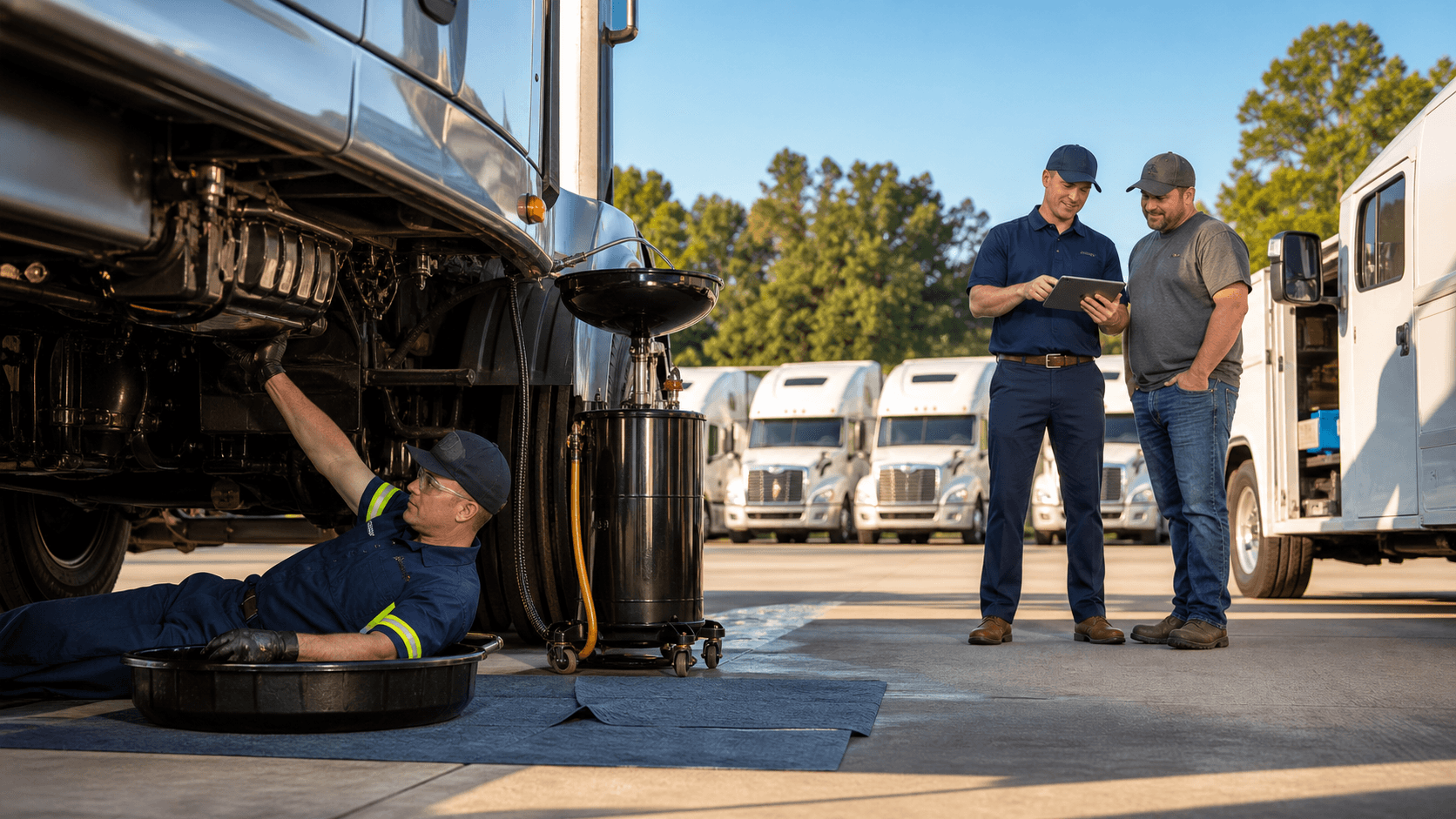
- Regular oil changes and fluid checks
- DOT inspections and safety checks
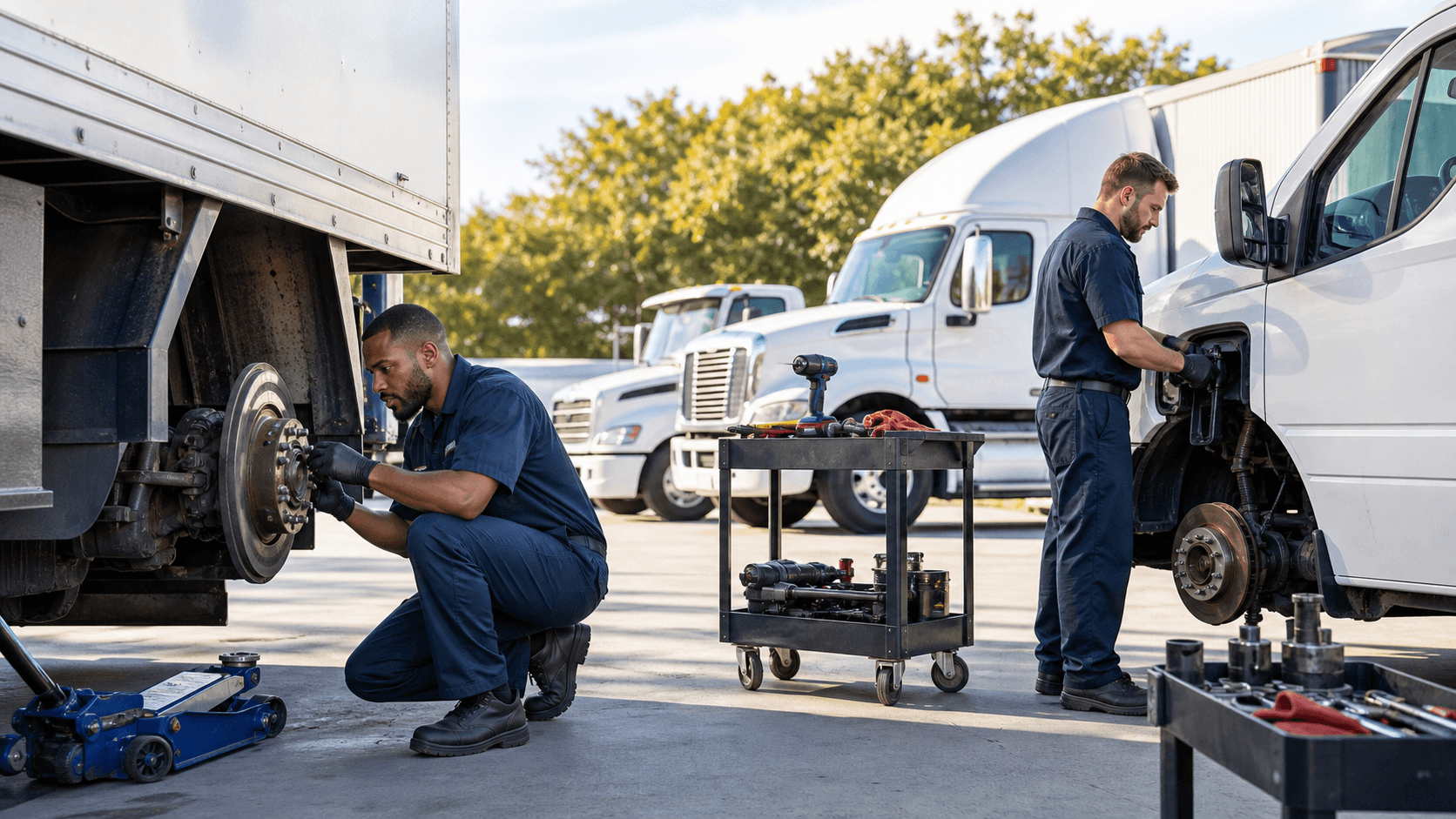
- Tire rotations, replacements, and brake work
Over time, this kind of structured approach gives you useful data. Tracking battery age, replacement dates, and failure patterns lets you:
- Spot trends, such as certain units needing batteries sooner
- Standardize battery types across your fleet where possible
- Plan ahead for future replacements in your maintenance budget
Integrating Mobile Battery Support with Your Fleet Operations
To really get the value from mobile battery replacement, it needs to line up with how your dispatch and maintenance teams already operate. The goal is to protect uptime, not interrupt it.
Here are a few common ways fleets work mobile battery support into their schedule:
- Regular visits to your terminal once or twice a month to test and service a set-group of trucks
- Pre-trip morning checks on units with known slow cranking or recent electrical complaints
- Targeted sweeps of any vehicles flagged by drivers or telematics for possible battery issues
While they are at your location, on-site technicians can often spot related concerns, such as:
- Loose or damaged battery cables
- Corroded grounds or poor connections
- Signs that an alternator or charging system may not be keeping up
Catching these problems early helps prevent future no-start calls and keeps your electrical system steady. Reliable batteries also support key safety and compliance systems, including lights, brake controls, and telematics devices that help keep your vehicles inspection-ready and trackable on the road.
When mobile battery support is woven into your normal operations, trucks spend more time earning and less time waiting. Drivers gain confidence that their equipment will start when they turn the key, even on a hot afternoon in a crowded lot.
Putting Mobile Battery Replacement to Work for Your Fleet
A thoughtful battery strategy, backed by mobile replacement support, gives your fleet fewer surprises and smoother days. You see fewer roadside breakdowns, more predictable maintenance, and better driver uptime through busy seasons.
If you look back at your recent roadside calls, driver complaints about slow starts, and no-start events, you will probably see a pattern. Those small warning signs are your chance to shift from reacting to planning. With mobile battery replacement available on-site from a team like ours at East Coast Fleet Service, you can time battery work around your routes, your hours, and your local North Carolina conditions so your trucks stay ready when your customers are counting on you.
Keep Your Fleet Moving With On-Site Power Solutions
When a truck will not start, every minute parked is money lost, and that is why East Coast Fleet Service brings fast, reliable mobile battery replacement directly to your lot or job site. Our technicians come equipped to test, replace, and verify your batteries so your vehicles can get back on the road quickly. If you are ready to minimize downtime and keep schedules on track, contact us today to schedule service.