
Keeping Fleet Costs Down Starts with Smart Repair Choices
Choosing between mobile repairs and shop repairs is not just a maintenance question, it is a business decision that affects your total cost of ownership, uptime, and customer experience. Every time a vehicle is off the road, you are paying for more than parts and labor. You are paying in driver hours, missed stops, rescheduled jobs, and added admin work.
That is why it helps to think in terms of total cost, not just the price on a repair invoice. Total cost includes lost productive time, fuel burned driving to and from a shop, rental or subcontractor fees, and the headaches that show up when customers are kept waiting. In this guide, we will look at how mobile and shop-based repairs each fit into a smart commercial fleet service plan, and how Raleigh-area fleets can use both to keep vehicles road-ready while spending less overall.
Understanding Mobile Fleet Repair and When It Shines
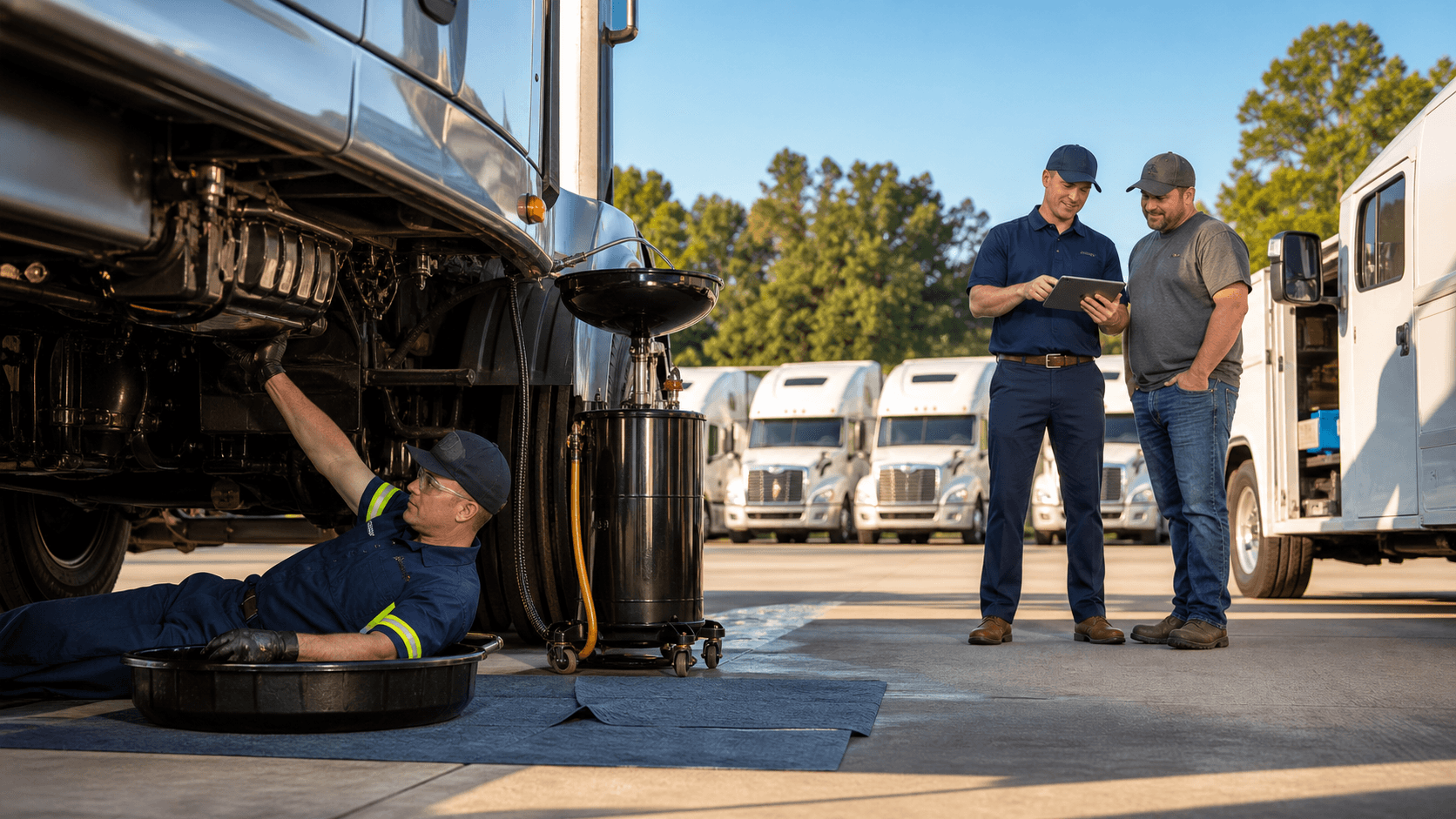
Mobile repair means technicians come to where your vehicles already are, such as your yard, terminal, or jobsite. For most fleets, this covers preventive maintenance and light to medium repairs that keep units safe, compliant, and dependable. With on-site service, you can keep routes moving while your maintenance program happens in the background.
Mobile service creates direct savings in several ways: you are not paying drivers to sit in traffic on the way to a shop, you are less likely to need a tow when issues are caught early, and you can schedule work during off-hours. That combination is especially valuable when your customers expect tight delivery windows or specific appointment times and you cannot afford last-minute disruptions.
Some of the best uses for mobile commercial fleet service include:
- Routine oil changes, filters, and basic inspections
- DOT and safety inspections handled on-site
- Tire rotations, minor tire repairs, and tire checks
- Battery testing and replacement
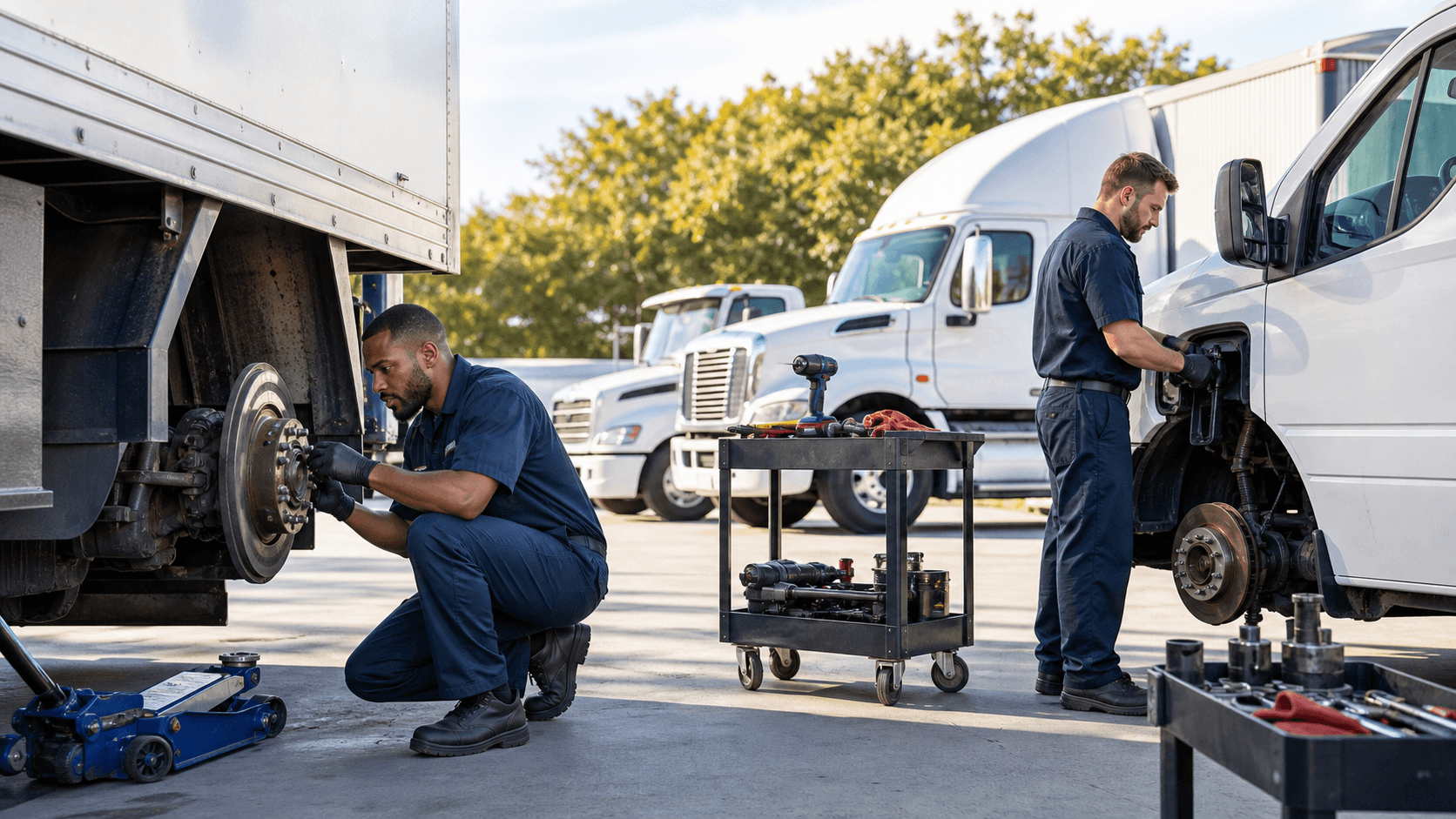
- Brake inspections and light brake work on many light and medium-duty units
When one trusted provider is consistently looking over your fleet where it parks, small problems are more likely to be spotted before they become big failures. That proactive approach can keep more repairs in the mobile category and out of the shop, which means less lost revenue from unplanned downtime.
Where Shop Repairs Still Make Better Financial Sense
Even with a strong mobile program, there are repairs that belong in a shop. Large driveline, engine, or transmission jobs usually require equipment and space that are not practical to carry on a service truck. The same goes for complex electrical diagnostics that depend on advanced testing tools and fixed work bays.
Shops are typically the better choice for jobs such as:
- Major engine or transmission repairs or replacements
- Deep driveline or differential work
- Complex electrical or electronic diagnostics
- Structural repairs, liftgate work, or body issues
- Some warranty-specific repairs that must be done in certain facilities
There are financial advantages to using a shop for these bigger jobs. Shops have lifts, alignment equipment, and other specialized tools that would be expensive and inefficient to duplicate in a mobile setting. With multiple technicians in one place, complex jobs can often move through a faster workflow. A controlled environment also helps when a repair involves teardown, detailed inspection, and testing of high-risk components.
Sending a vehicle to a shop can also make sense when it will not hurt your operation. If you have spare units to cover that route, if you can batch several planned repairs into one visit, or if a major failure has already put the truck down and towing is required anyway, the additional downtime may not add much to your total cost.
Comparing Real-World Costs: Downtime, Labor, and Risk
When we talk about what really saves money, we have to put numbers to downtime. True downtime cost is more than the hourly pay of a driver who is waiting. It also includes lost or delayed jobs, customer penalties, extra dispatch work, and any rentals or subcontracted carriers needed to keep commitments.
To get a clearer picture, many fleet managers look at things like:
- Driver wages and benefits during unproductive time
- Revenue per hour that each truck normally brings in
- Extra fuel and miles added just to reach a shop
- Rentals or outside carriers used when trucks are down
Labor and logistics are another piece of the puzzle. With mobile service, a single technician travels to you, instead of multiple drivers shuttling trucks to and from a shop and waiting in queues. A shop may sometimes have a lower hourly labor rate on paper, but if drivers spend half a day off the road to get there, the true cost can end up higher.
Risk and reliability also belong in your commercial fleet service strategy. Regular mobile preventive maintenance reduces the odds of a truck breaking down at the worst possible moment, such as during peak traffic or at a remote jobsite. On the other hand, when a problem is complex, sending the vehicle to a shop for thorough diagnostics can reduce the chance of repeat visits and comeback work.
Most fleets find the best financial result when they put predictable, repeatable maintenance and light repairs on a mobile schedule, and reserve shop time for heavy repairs that truly need it. The balance point will be different for each operation, but the principle holds across many types of fleets.
Building a Hybrid Fleet Repair Strategy That Actually Saves Money
The most effective maintenance plans rarely choose mobile or shop as an either-or decision. Instead, they use a tiered approach that matches the job to the setting. One simple way to think about it is in three tiers.
Tier 1 is mobile on-site preventive maintenance and minor repairs. This is the foundation of your program. Oil services, inspections, basic adjustments, and quick fixes happen in your yard or at your jobsite, ideally during off-hours so your drivers are ready to go when the workday starts.
Tier 2 is pre-planned shop work for items identified during mobile inspections. When your mobile provider notes a developing issue that is better handled in a shop, you can schedule that work before it becomes an emergency. Batching these repairs into fewer visits helps reduce shuttle time and admin effort.
Tier 3 is emergency support for the breakdowns that still happen in the real-world. Even with a strong preventive program, parts wear out and unexpected failures occur. Having a clear plan for who handles what, and which units are your backups, keeps those surprises from turning into chaos.
Data should guide how you refine these tiers. Helpful habits include:
- Tracking repair types, frequency, and cost by unit
- Flagging repairs that repeatedly trigger unplanned downtime
- Shifting recurring issues into your mobile preventive schedule when possible
- Measuring the effect on uptime and cost per mile over time
Working with one commercial fleet service partner that has strong mobile capabilities can simplify this process. With a single source handling on-site work and coordinating with your preferred shops, OEM dealers, or in-house technicians, you get cleaner records, easier scheduling, and a clearer view of your true costs. At East Coast Fleet Service in the Raleigh area, we build plans that match the size, routes, and duty cycles of each fleet instead of forcing a one-size-fits-all template.
Turn Your Repair Mix Into a Competitive Advantage
The key takeaway is that mobile repairs and shop repairs both have an important place in a smart maintenance plan. Mobile service usually delivers the best value for preventive maintenance and light to medium work, especially when downtime is expensive and schedules are tight. Shop repairs make more sense for heavy, complex jobs that need advanced tools, multiple technicians, and a controlled environment.
Fleet managers who treat repair choices as a strategic decision, not just a scheduling task, tend to see lower total cost of ownership and more reliable service to their customers. Reviewing the last several months of invoices, downtime logs, and driver feedback can reveal where mobile service could have prevented a tow, shortened a delay, or kept an extra truck on the road. When your repair mix is tuned to how your operation really works, maintenance stops being a constant fire drill and starts becoming a source of competitive strength.
Keep Your Fleet On The Road With Reliable Service
If you are ready to reduce downtime and keep every vehicle in top shape, our team at East Coast Fleet Service is here to help. Explore our specialized commercial fleet service solutions tailored to your routes, schedules, and equipment. We will work with you to create a maintenance plan that fits your operation and budget. To schedule service or ask a question, just contact us today.