What Raleigh Fleets Are Really Paying for Tire Downtime
Tire trouble rarely shows up on a budget as just a tire. For fleets running around Raleigh, Durham, and across North Carolina, the real pain is everything that happens between the first warning light and the moment the truck is rolling again. That lost time gets buried under simple repair invoices, but it is what quietly drags down profit, service levels, and safety scores.
When freight and construction work are busy and the heat is high, tire failures become more common. Heavier loads, hotter pavement, and more stop-and-go traffic all push tires harder. To make smart choices between mobile tire replacement service and traditional shop trips, fleets need a simple way to put real numbers on downtime, tow fees, missed loads, and safety risk. That is where a clear cost calculator framework comes in.
Mapping the True Anatomy of a Tire Event
A tire failure looks fast from the outside, but inside your operation there is a full chain of events. Each step has a time cost and a dollar cost.
A typical tire event might look like this:
- Driver feels a pull, vibration, or warning light
- Driver calls dispatch and waits for instructions
- Dispatcher checks options, calls maintenance, calls roadside or a tow
- Truck sits waiting on the shoulder, at a dock, or in the yard
- Service or tow arrives, repairs or replaces the tire
- Driver gets back on the road and tries to recover the schedule
Every person touched by this event is being paid or pulled away from other work. That usually includes:
- Driver pay and benefits
- Dispatch and office time
- Maintenance or safety staff time
- Customer service handling late load calls
Whether the truck is on I-40 near Raleigh, sitting at a customer in RTP, or parked in a local yard in Garner or Durham, every extra minute is money. If you do not measure that time, you cannot manage it.
Building Your Tire Downtime Cost Calculator
A good cost calculator does not need to be fancy. A simple spreadsheet with clear inputs is enough. The key is to be honest and consistent with your numbers.
Here are core inputs most North Carolina fleets can track:
- Average revenue per truck per hour on the road
- Driver wage and benefits per hour
- Average tow fee ranges in your lanes
- Typical shop labor rates and minimums
- Value of a lost or delayed load, including any accessorial chargebacks
From there, you can turn each tire event into a basic formula:
- Downtime cost: Downtime hours x revenue per hour
- Driver cost: Downtime hours x driver wage and benefits
- Tow cost: Actual tow or roadside call
- Repair cost: Tire plus any labor or service fees
- Penalties: Late fees, rescheduled appointments, or chargebacks
You can also add a simple seasonal factor. For example, you might track:
- How often tire calls happen in hotter months
- How long roadside waits are during busy traffic times around Raleigh
- Any premium charges you see on nights and weekends
Once those pieces are in place, you have a clear way to compare different choices for handling the next tire call.
Comparing Mobile Tire Replacement to Shop Service in NC
Most fleets fall back on the same pattern when a tire fails. Either they tow the unit to a shop, or they limp it there if they can. That often means:
- Waiting for a tow or safe escort
- Losing time in traffic on the way to the shop
- Sitting in a line behind other jobs
- Having the driver off route for a long stretch of the day
When you plug this into your calculator, the hours add up quickly. You see not only the tow and the tire invoice, but also lost revenue, wasted driver time, and delayed freight.
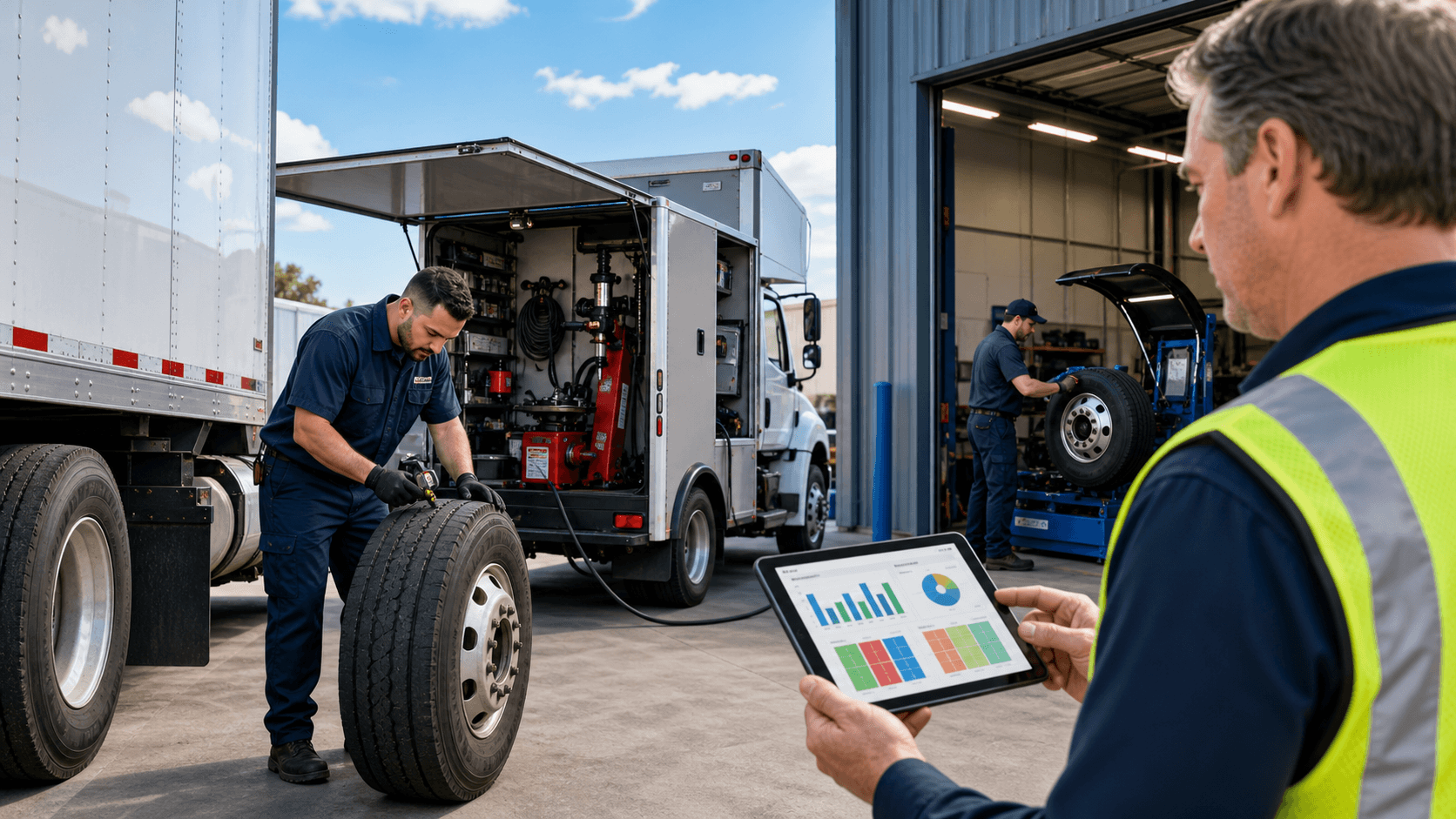
Now compare that to a mobile tire replacement service where a truck is dispatched directly to your unit:
- No tow or much lower risk of needing one
- Repair done where the truck is, on-site or roadside
- Shorter wait to start work if the provider is dedicated to fleet service
- Less disruption to the driver's hours and planned route
Use your calculator to do a side-by-side:
- Shop scenario: Tow time, shop wait, repair time
- Mobile scenario: Response time, repair time, no tow
Even trimming one or two hours of downtime per tire event can create large savings over a year, especially for local and regional routes that stay in and around Raleigh and central North Carolina.
Quantifying Hidden CSA and Safety Risk Dollars
Tire problems do not just cost time; they show up in your safety profile. Tire violations, out-of-service calls, and roadside breakdowns can hurt CSA scores. That can lead to more inspections, longer delays at scales, and changes in how partners view your operation.
You can estimate a simple "CSA risk cost" per tire event by looking at:
- Any past increases in insurance after spikes in violations
- Lost or reduced freight opportunities tied to poor safety scores
- Extra inspection time and the downtime that comes with it
Take those total annual impacts and divide by the number of tire events you have. It will not be perfect, but it gives you a number to plug into your calculator.
When you reduce the chances of roadside tire failures, you also reduce the odds of those violations and breakdowns. Fewer heat-related blowouts in summer and fewer emergency stops on the shoulder mean less risk, better safety records, and less hidden cost.
Turning Your Calculator Into a Summer Fleet Strategy
Once you have your numbers, you can turn the calculator into a real plan for the hotter months. Many fleets find it helpful to build two scenarios: a "mobile first" strategy and a "shop only" strategy.
For each scenario, you can decide:
- How dispatch should respond when a tire issue is reported
- When to default to mobile tire replacement service inside your normal service radius
- When a shop visit still makes sense, such as major repairs in a controlled setting
You can also plan more preventive work. For example, setting regular on-site tire inspections during peak season can catch wear, sidewall damage, or under-inflation before they become breakdowns on the road. When those checks are done at your yard, you avoid extra trips and keep more control over scheduling.
With the right partner providing on-site fleet service across North Carolina, unplanned summer tire problems turn into scheduled work. That means fewer surprises, more uptime, and cleaner safety records for your drivers and your customers.
Keep Your Fleet Moving With On-Site Tire Service
When a truck is down with a tire issue, we come to you so your drivers can get back on the road faster. Our mobile tire replacement service is designed to minimize downtime and keep your schedule on track. Reach out to East Coast Fleet Service today to schedule service or discuss a maintenance plan tailored to your fleet. If you are ready to get started, simply contact us and we will handle the rest.