
Keep Your Raleigh Fleet on the Road, Not in the Shop
Downtime hurts. When a truck is stuck in the shop instead of rolling through Raleigh, routes fall behind, drivers sit and wait, and customers start asking why their delivery is late. Every unplanned breakdown steals time from your team and money from your business.
Professional fleet maintenance flips that around. Instead of fixing trucks only when they fail, the work is planned on a steady schedule. The goal is simple: keep your trucks safe, legal, and ready to run, day after day. In this article, we will walk through how a professional fleet maintenance schedule really works for Raleigh trucks, how local traffic and weather shape that schedule, and how mobile service can make the whole process easier on your team.
What Professional Fleet Maintenance Really Means
Professional fleet maintenance is not just changing oil and swapping a tire when it blows out. It is a planned system that covers every truck in your fleet on a clear, repeatable schedule.
A professional approach usually includes:
- Regular inspections based on time, miles, and hours
- Written service intervals for each system on the truck
- Consistent records of what was done and when
- Skilled diagnostics when something does not feel right
Instead of guessing, the plan lines up:
- OEM guidelines for each truck model
- How the vehicles are used, stop-and-go, highway, heavy loads, long idling
- DOT requirements for safety and compliance
When all of that is pulled into one simple plan, you get real business wins. Trucks last longer before they need major repairs. Budgets become steadier because work is planned instead of rushed. Drivers feel safer and more confident. Fuel economy can stay steadier when engines, tires, and brakes are in good shape. And those stressful, last-minute shop trips become far less common.
Core Maintenance Intervals for Raleigh Work Trucks
Every fleet is different, but most Raleigh work trucks follow similar core service categories. A professional fleet maintenance schedule focuses on key systems first, then fine tunes the timing for how your trucks actually run.
Common service groups include:
- Oil and filter changes
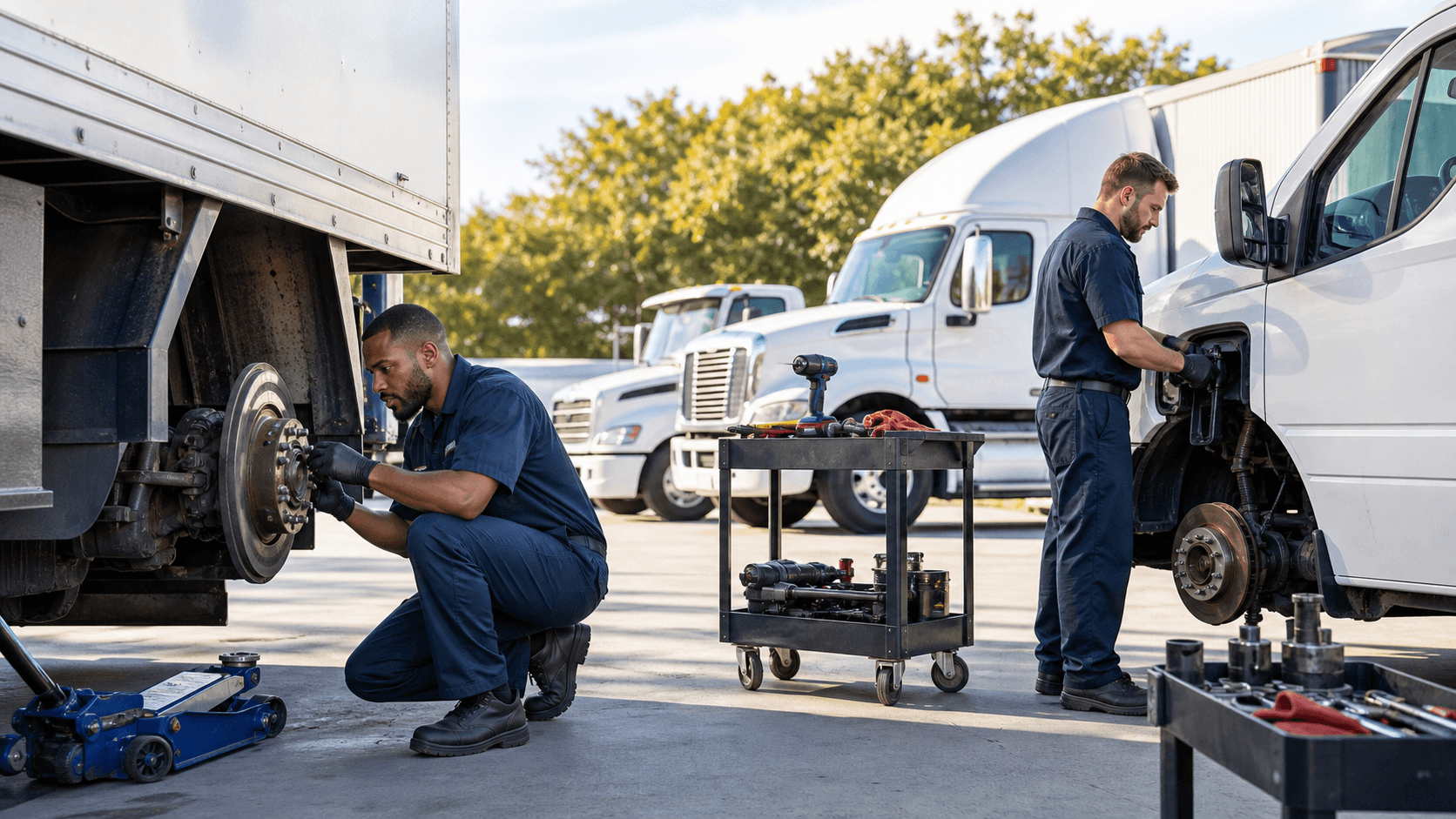
- Brake inspections and pad or shoe replacement
- Tire rotations, repairs, and replacements
- Battery testing and replacement
- Coolant level checks and system inspections
- Overall safety checks, lights, steering, suspension, leaks
Raleigh driving conditions put their own spin on these intervals. City congestion around downtown and the Beltline means more stop-and-go, which is hard on brakes and transmissions. Frequent runs on I-40 and I-440 rack up steady highway miles that wear tires faster. Summer heat puts extra stress on cooling systems and batteries.
A professional plan looks at:
- Vehicle type, box trucks, service vans, pickups, medium duty units
- Load patterns, light service calls versus constant heavy cargo
- Route style, tight city routes, highway runs, or a mix
- Telematics or mileage data, how far and how often each unit moves
Instead of using one basic mileage rule for every truck, the schedule is adjusted for each unit. Some trucks may need brake checks more often. Others may hit oil change mileage much faster. The idea is to match the work to what the truck really does, not what a sticker on a windshield says.
Seasonal Maintenance Strategies for Raleigh Summers
Raleigh summers bring real heat, frequent storms, and plenty of stop-and-go traffic. July afternoons can be especially hard on engines and drivers. If a truck is already running hot or a battery is weak, that kind of weather will expose the problem in a hurry.
A summer-focused checklist often includes:
- Cooling system inspections, hoses, clamps, radiator, coolant level
- Coolant flushes when fluid is old or contaminated
- Battery tests to catch weak batteries before they fail
- AC performance checks so drivers are not stuck in hot cabs
- Tire pressure checks, since heat can change pressure quickly
- Belt and hose inspections under the hood for cracks or wear
Planning this work in late spring or early summer helps your fleet avoid:
- Overheating on the side of the road
- AC failures when drivers are in afternoon traffic
- Tire issues caused by low or high pressure in hot pavement conditions
By making summer checks part of your professional fleet maintenance schedule, you turn the season from a headache into just another planned step.
How Mobile Service Changes Fleet Maintenance Downtime
Traditional shop service means sending trucks across town, waiting in line, arranging rides for drivers, and shuffling routes when a truck is gone longer than expected. Even a simple oil change can eat up a big chunk of the day.
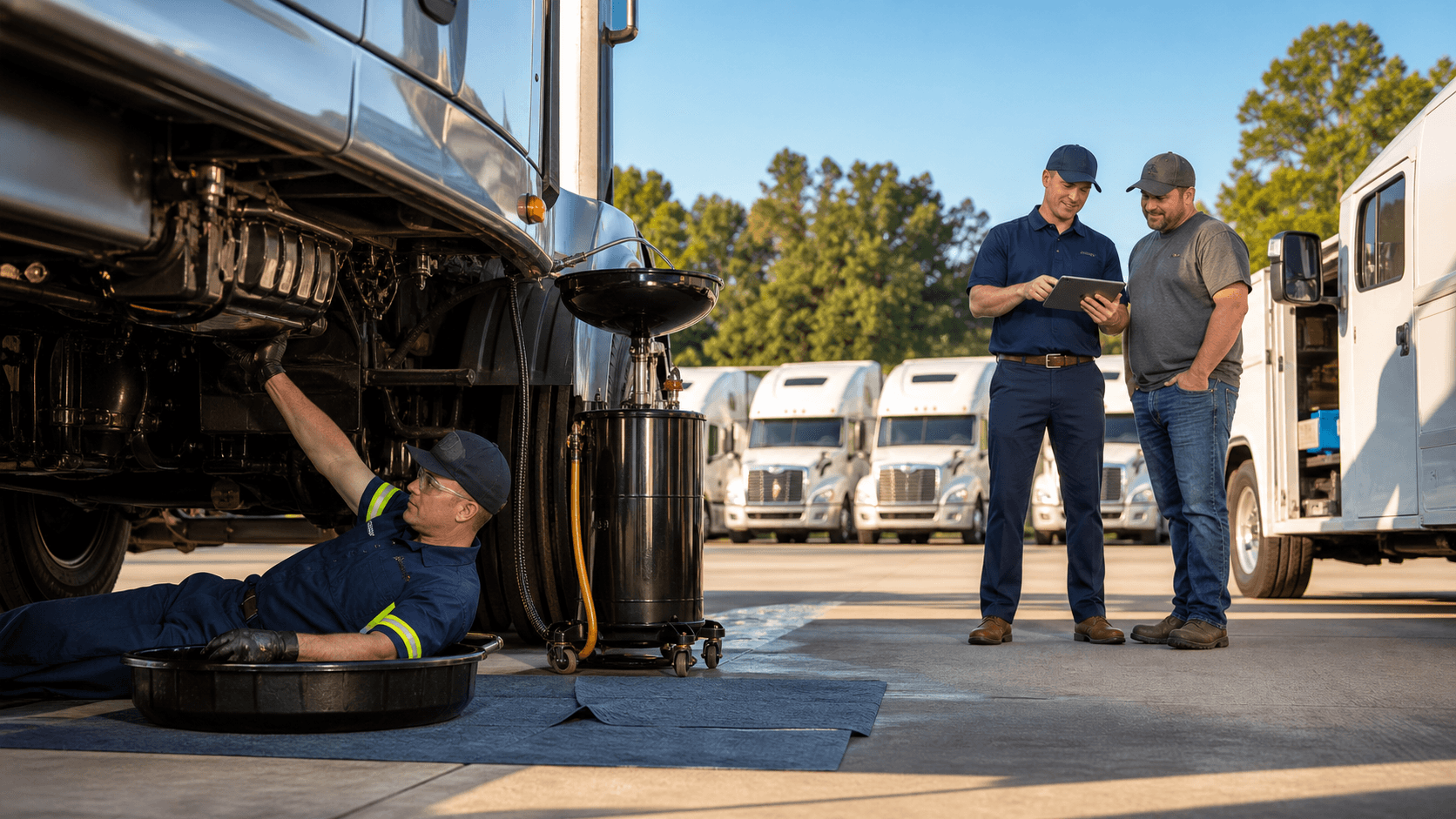
Mobile, on-site professional fleet maintenance flips that process. The service comes to your lot or yard with the tools, parts, and equipment needed for planned work. That can look like:
- Early morning service before trucks go out
- Evening service after the last route returns
- Working through several units at once while they sit parked
- Handling oil, tires, brakes, and batteries in the same visit when possible
For Raleigh and Triangle fleets, this means less disruption to normal routes, more steady uptime, and a quicker response if a truck has an issue close to home. Instead of moving vehicles in and out of a shop, your team keeps working while maintenance is handled in the background.
Building a Tailored Maintenance Plan for Your Raleigh Fleet
A strong maintenance plan does not come from a generic chart. It starts with getting to know your fleet and how it works every day.
A professional provider will typically:
- Review your current fleet list and truck types
- Look at any service records you already have
- Talk through routes, loads, and driver habits
- Line up OEM guidance with DOT requirements
From there, the schedule is built into clear, easy-to-follow intervals. Maintenance logs, whether on paper or digital, keep everything on track. Those records also show patterns. Maybe the same route is rough on suspensions. Maybe one group of trucks tends to wear through front tires faster. With that information, the plan can be improved over time.
The best professional fleet maintenance schedules are living plans. They adjust when routes change, seasons shift, or you add new vehicles. The goal is not a perfect chart that hangs on a wall. The goal is a real system that fits your Raleigh operation and keeps your trucks ready to roll.
Put a Professional Fleet Maintenance Schedule to Work Now
If you look across your lot and see trucks that always seem to be waiting for repairs, that is a sign your maintenance schedule may be more reactive than planned. Common warning flags include missed intervals, frequent emergency calls, or the same unit breaking down at the worst possible time.
A good next step is simple. Gather current mileage for each truck, pull together any service history you can, and sort your fleet by priority, the units that carry the heaviest loads or run the most miles. From there, a professional mobile provider like East Coast Fleet Service can help build a clear, seasonal maintenance calendar that fits your hours, your routes, and your Raleigh operating conditions, so your trucks stay on the road where they belong.
Keep Your Fleet On The Road With Expert Care
If you are ready to reduce downtime and keep every vehicle performing reliably, our team is here to help with trusted professional fleet maintenance. At East Coast Fleet Service, we come to you so your drivers stay focused on the job, not sitting in a waiting room. Tell us about your fleet's needs and schedule a visit through our contact page so we can put a customized maintenance plan in motion.