Rethinking Fleet Uptime Before Peak Summer Demands
Heat in North Carolina is hard on trucks. Long routes, heavy AC use, soft pavement, and hot asphalt all put extra stress on engines, tires, brakes, and batteries. When demand is high, even one truck down can throw off routes, delivery times, and customer promises.
So the big question comes up fast: is in-house truck maintenance still the smartest way to keep your fleet moving, or does a total fleet service model make more sense now? As a mobile, on-site maintenance provider, we see both sides every day. Our goal here is to help you think through your options, so you can protect uptime before the next busy stretch hits.
What in-House Truck Maintenance Really Costs You
Keeping everything in-house can feel safe and familiar, but it comes with costs that are easy to miss when you are focused on getting trucks out the gate.
Hidden labor costs and productivity loss include things like:
- Wages and benefits for in-house techs, plus the time and effort it takes to hire and train them
- Lost billable hours when drivers sit around waiting on service or shuttle trucks back and forth to a shop
- Overtime for drivers and managers when repairs run long or push into evenings and weekends
Then there is the equipment and facility side. A shop is not just a couple of toolboxes and a creeper. It often means:
- Diagnostic tools, lifts, compressors, and specialty equipment that need updates and replacement
- Floor space tied up for bays, parts, and storage instead of revenue-producing use
- Extra costs like utilities, insurance, and safety or environmental compliance
On top of that, there is the risk of gaps in expertise and coverage. Modern commercial vehicles keep changing. Mixed fleets with light, medium, and heavy-duty units need different skills and tools. If one key tech is out sick or leaves, or a problem comes up that your team has not seen before, trucks can sit. Those gaps usually show up at the worst time, like the middle of a hot summer week when breakdowns hurt most.
How Total Fleet Service Works for Busy NC Operators
Total fleet service is a different way to think about maintenance. Instead of building and running your own full shop, you partner with a team that handles most or all of your routine and emergency work.
The core idea is simple:
- A single maintenance partner plans, tracks, and services your fleet as an ongoing program
- You get support for both preventive work and urgent issues, not just one-off repairs
- The focus is on predictable scheduling, clear communication, and keeping assets healthy long term
This is more than just a mobile tech showing up when something breaks. It is a strategic setup built around your routes and your schedule.
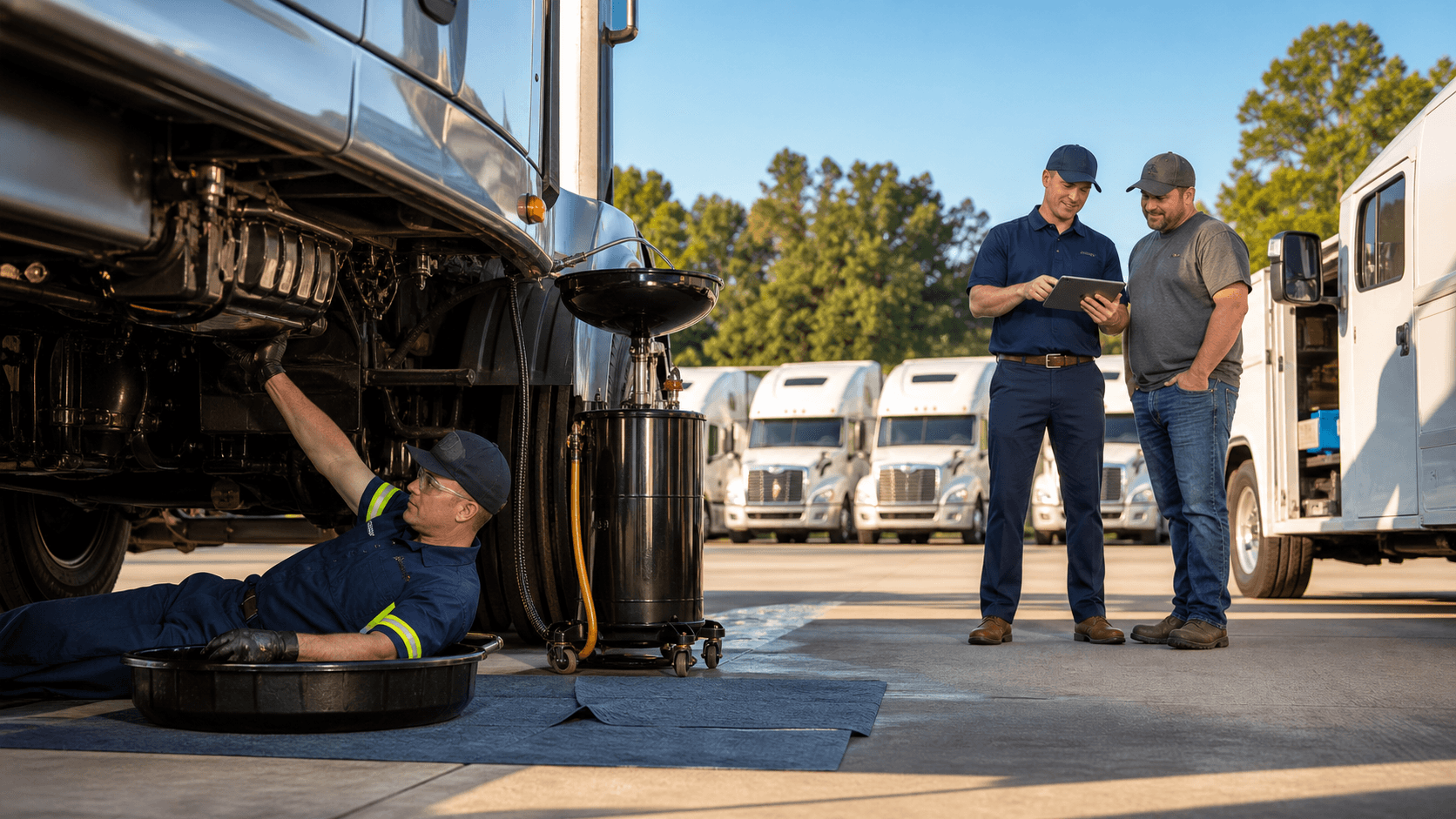
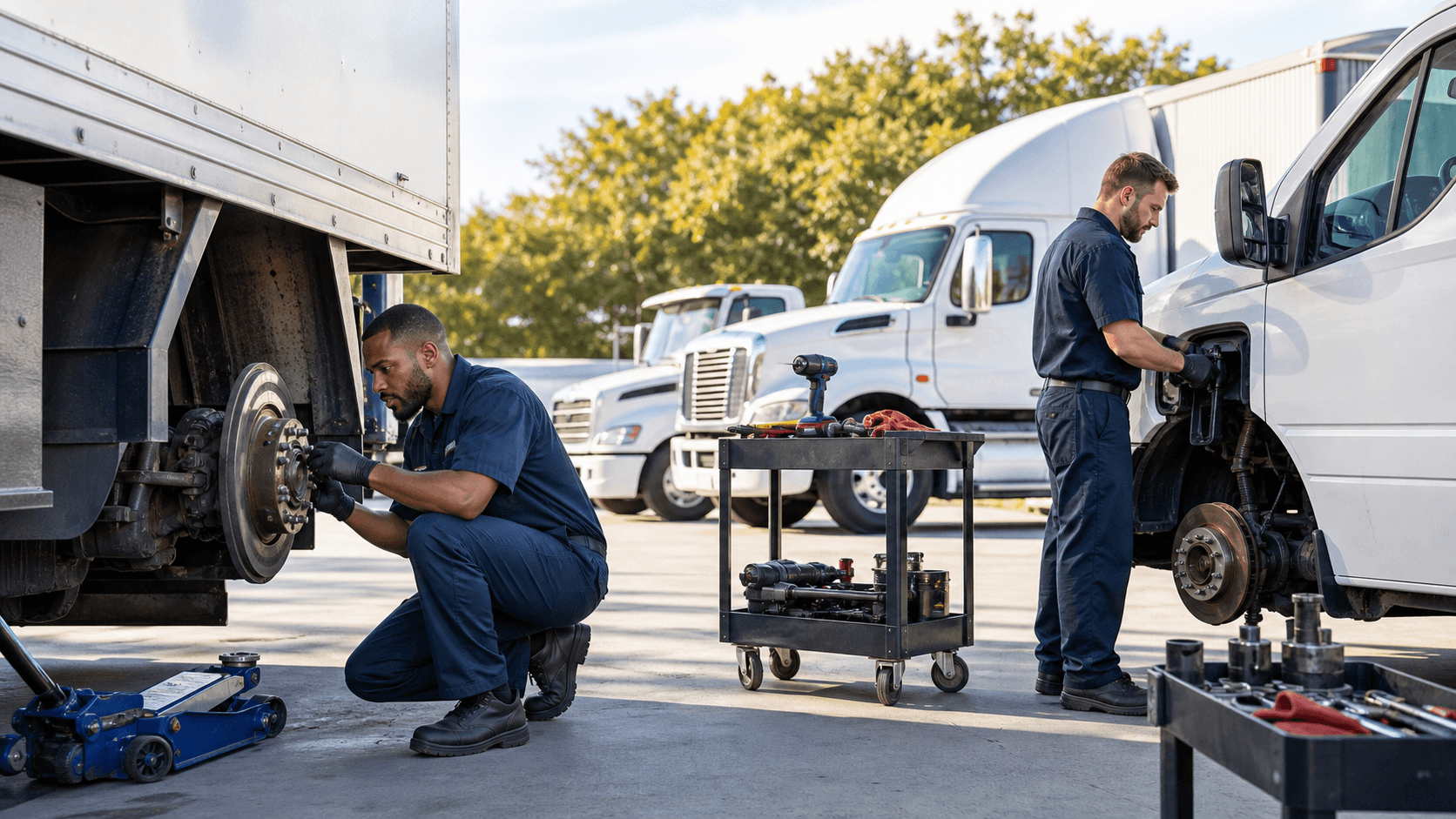
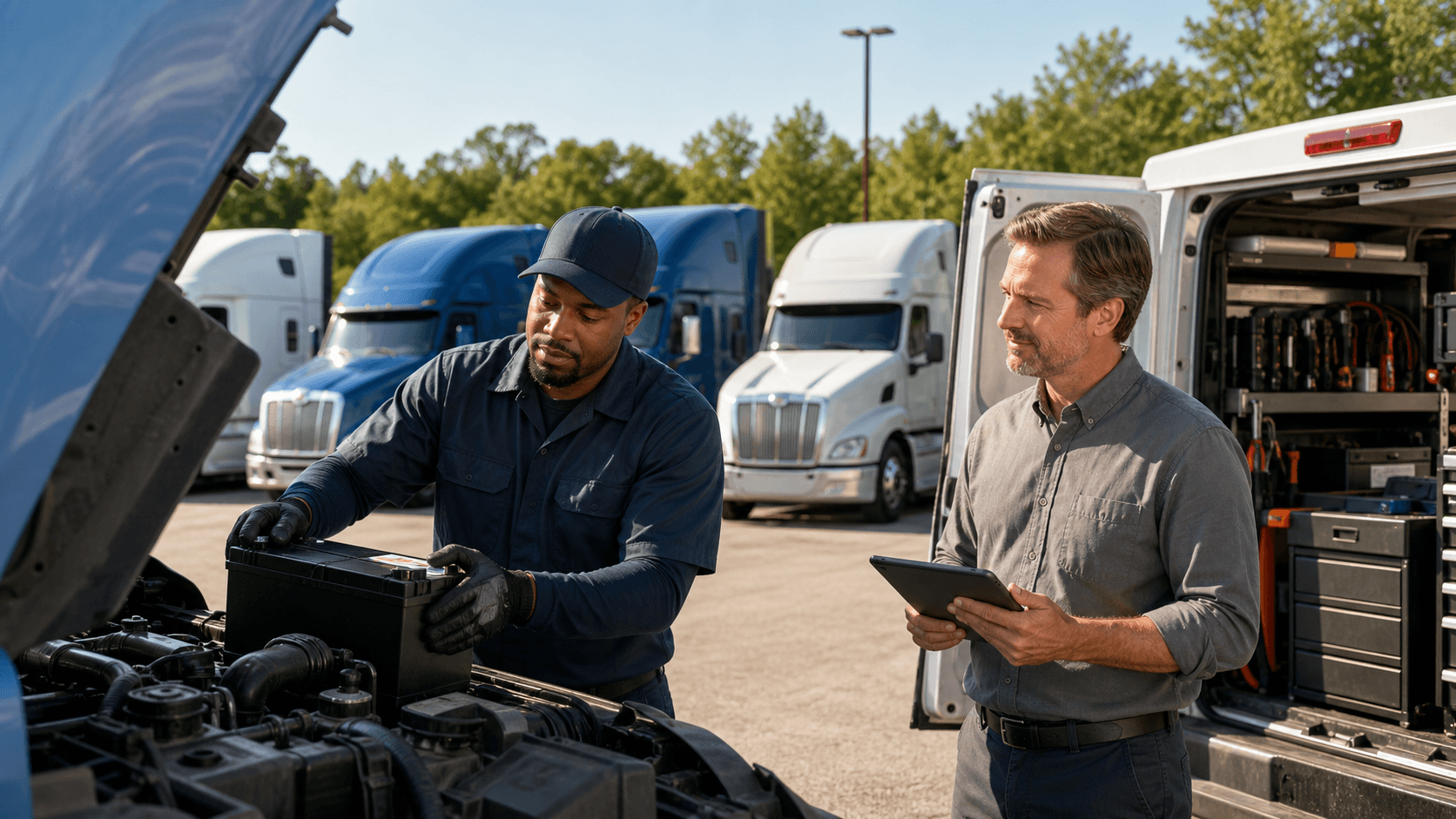
With on-site, mobile support, technicians come straight to your yard or job site for services like oil changes, tires, brakes, and battery work. Because the work happens where the trucks are, you avoid shuttling vehicles and waiting in shop queues. Service can be planned during off-hours, slow shifts, or staging windows so your trucks stay on the road when they are needed most.
There is also a strong planning and compliance benefit. A total fleet service partner can help you:
- Keep consistent service records that support DOT requirements and warranty terms
- Build preventive maintenance plans based on mileage, engine hours, and seasonal demands
- Schedule things like cooling system checks, tire inspections, and battery testing ahead of hot weather
When you have a clear schedule, fewer jobs surprise you. That makes budgeting and staffing easier and cuts down on those stressful emergency calls.
Side-by-Side: In-House Shop vs. Total Fleet Service
When you put the two models next to each other, some key differences stand out.
For downtime and responsiveness, an in-house shop can still run into long waits if parts are delayed, your tech is tied up, or a big job blocks a bay. A mobile total fleet service team can often respond directly on-site, get eyes on the truck sooner, and complete planned work without pulling drivers away from their normal routine. That helps keep delivery schedules on track and protects driver morale, because no one likes sitting around watching the clock.
On the cost and cash flow side, in-house maintenance usually brings higher fixed costs. You carry those costs whether your trucks are booked solid or going through a slow stretch. A total fleet service model is more tied to actual work performed. You pay as you go for maintenance that is planned out, instead of holding the full overhead of a shop. With better planning, you can often cut down on things like weekend emergency work or premium tow bills, because you catch issues before they fail on the road.
Control and quality are common concerns when fleets think about outsourcing. Many operators worry about losing control over standards or timing. In practice, a good total fleet service setup can actually give you more visibility. You get:
- Clear service checklists for each visit
- Digital or written reports on what was done and what is coming due
- Regular reviews so you can adjust schedules, priorities, and truck rotation
That structure pulls everything out of guesswork and driver-by-driver decisions. Instead, every unit is handled to a consistent process.
When a Hybrid Maintenance Strategy Makes Sense
For some fleets, the best answer is not all-in one way or the other. A hybrid approach can give you the benefits of both in-house work and total fleet service.
You might decide to keep limited in-house abilities for quick items like:
- Daily walk-around checks
- Fluid top-offs
- Simple minor fixes that keep trucks safe to move
Then, you rely on a mobile partner for scheduled preventive maintenance, seasonal readiness checks, and jobs that take more time or tools, like oil changes, tire work, brakes, and battery service. That way, your own team stays focused on what they can handle quickly, and bigger jobs do not clog your day.
Strategy also depends on fleet size and season. Smaller fleets might not be able to support a full shop at all, so total fleet service becomes the main backbone. Larger fleets may keep a shop for core work but use mobile support for overflow, remote locations, or busy summer weeks when heat makes tire blowouts and battery failures more likely.
To move toward a new model, it helps to build a simple roadmap:
- Audit your current maintenance workload, including wait times and missed routes
- Track downtime patterns across the year, especially during hot months and peak demand
- Test a mobile total fleet service partner on part of the fleet or at one location
- Watch KPIs like uptime, cost per mile, and number of road calls to compare models
Put Your Fleet Maintenance Strategy to the Test
If your trucks are working harder every summer and small delays keep turning into big schedule problems, it may be time to question the old in-house-only approach. Total fleet service is not about giving up control; it is about building a smarter plan that keeps your team focused on moving freight while trained technicians handle the maintenance where the trucks sit.
At East Coast Fleet Service, we work on-site with commercial fleets across North Carolina to support that kind of plan. By reviewing your current setup, looking at downtime patterns, and building a tailored maintenance schedule, we help you protect uptime, reduce surprises, and keep your trucks ready for whatever the next hot, busy day brings.
Keep Your Fleet On The Road With Expert Support
When every vehicle matters to your bottom line, you need a partner you can trust to keep them running safely and efficiently. Our total fleet service brings skilled technicians directly to your operation, minimizing downtime and disruptions to your schedule. At East Coast Fleet Service, we tailor our maintenance and repair plans to match how your fleet really works in the field. Ready to schedule service or discuss a custom plan for your vehicles? Contact us today.